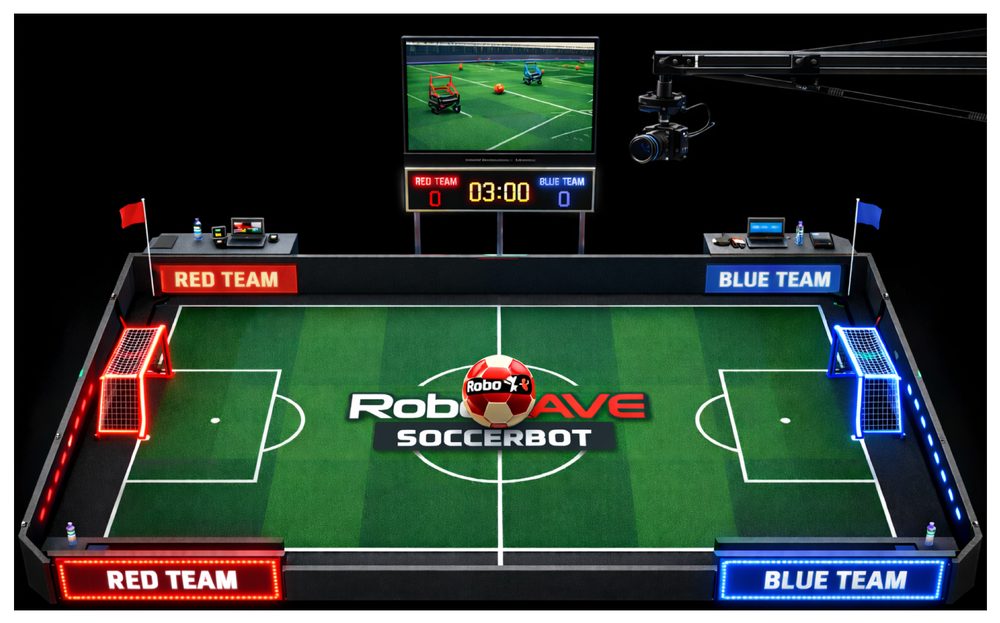
Five RoboRAVE challenges — a-MAZE-ing, Line Following, SumoBot, MiddleBot and SoccerBot RC. Based on the official Rules of RoboRAVE International Challenges (V6.2, 06.06.2026).
RoboRAVE Korea Open runs five challenges — a-MAZE-ing, Line Following, SumoBot, MiddleBot and SoccerBot RC. All challenges follow the official Rules of RoboRAVE International Challenges (V6.2, 06.06.2026). The summaries below cover the core requirements; the linked official rulebook is the authoritative document.
Divisions
ES · Elementary SchoolMS · Middle SchoolHS · High SchoolUP · University / Professional
1-1If fewer than 5 teams are registered in any division, the Event Director may combine divisions.
RoboRAVE core values
Have fun while learningSharingTeamworkRespectResponsibility
1-2Behaviour must be friendly and respectful at all times. Any issue to be raised must be submitted in writing to the Event Director or Organizing Committee; confronting or harassing a track marshal, referee or judge may result in a warning, sanction or removal from the event.
2a-MAZE-ing
Goal — design, build and program a robot that follows an elevated wooden maze without falling off. Completing the maze before the time limit adds bonus points.
Item
Specification
Divisions
ES · MS (HS occasionally)
Robot
Autonomous, any platform (LEGO, Abilix, VEX, Makeblock, Arduino, ESP32 etc.), value ≤ USD $1,500. Minimum two wheels plus one caster wheel.
Volume
≤ 65,030 cm³
Sensors
Gyro sensors are prohibited. No external sensors may be used to follow the maze; wheel encoders are allowed.
Time
2 minutes (120-second countdown)
Track
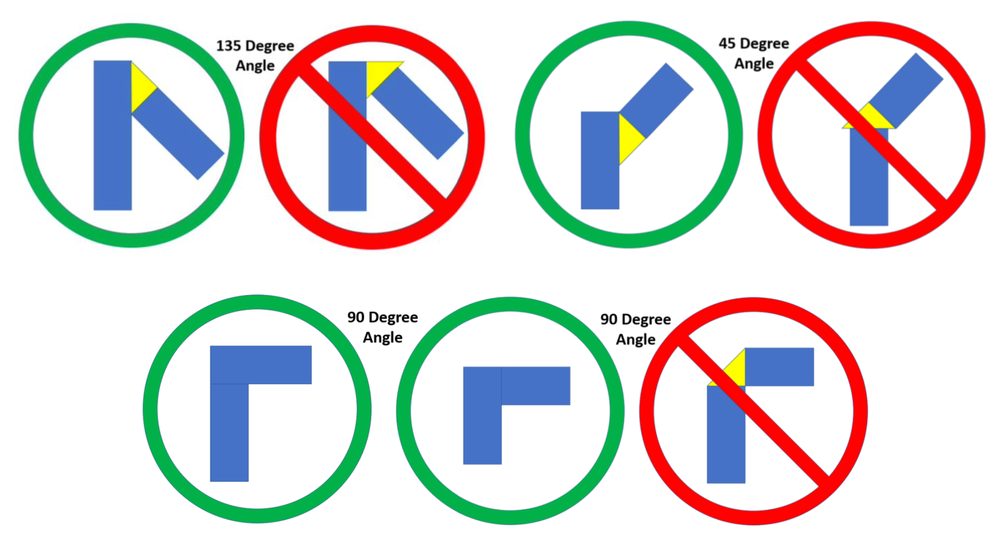
Particle board or similar, 24 cm wide × 2 cm high, with angled turns of −45°, −90° and −135°. ES: 4 straights + 3 turns. MS: 6 straights + 5 turns.
Scoring
50 points per completed straight section, 100 points per completed angled turn (front wheels must touch the scoring line). ES total 500 points, MS total 800 points. Finishing early adds 1 bonus point per whole second remaining.
Angled turns of the a-MAZE-ing track — permitted and prohibited turn configurations.
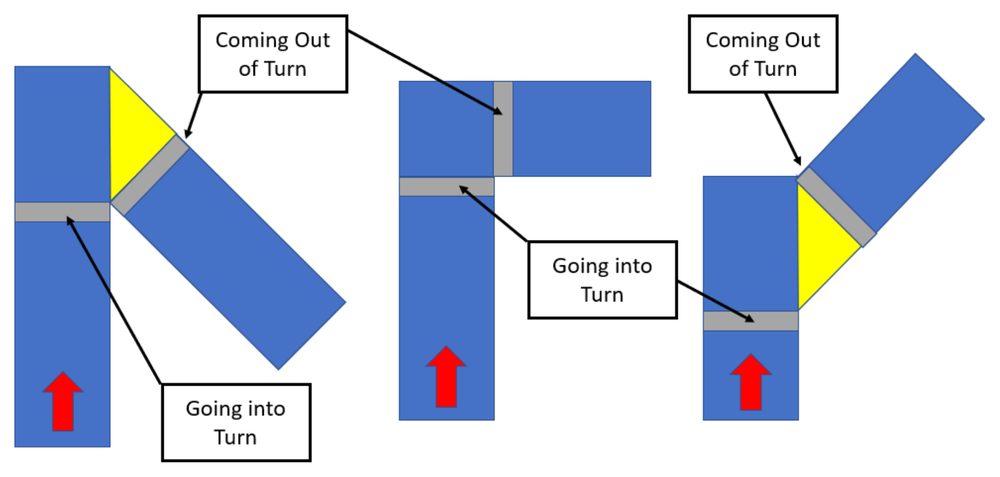
How the robot goes into and comes out of an angled turn — the hypotenuse is placed against the straight leg from which the robot turns.
2-1If the robot falls off the maze before the finish line and time remains, return it to the starting line and try again. A robot has fallen when any wheel is completely off the track or touches the surface supporting the track. The top eight teams in each division advance to the final tournament.
3Line Following
Goal — build a line-following robot that follows a black line on a white background to a tower, delivers at least one ball, and returns to its starting point. In the remaining time it returns to the tower to deliver the exact required number of balls for its division.
Item
Specification
Divisions
ES · MS · HS · UP ([LEGO/VEX IQ] and [Open] categories)
Robot
Autonomous, any platform, cost ≤ USD $1,500; volume ≤ 65,030 cm³. Multiple sensors and processors are allowed.
Time
3 minutes. A line-following program must control the robot at all times.
Tower
20 cm tall × 10 cm wide × 35 cm long, with a 10 × 10 cm opening on top and an open back; secured to the track with Velcro tape. The tower may not be touched during delivery.
Track
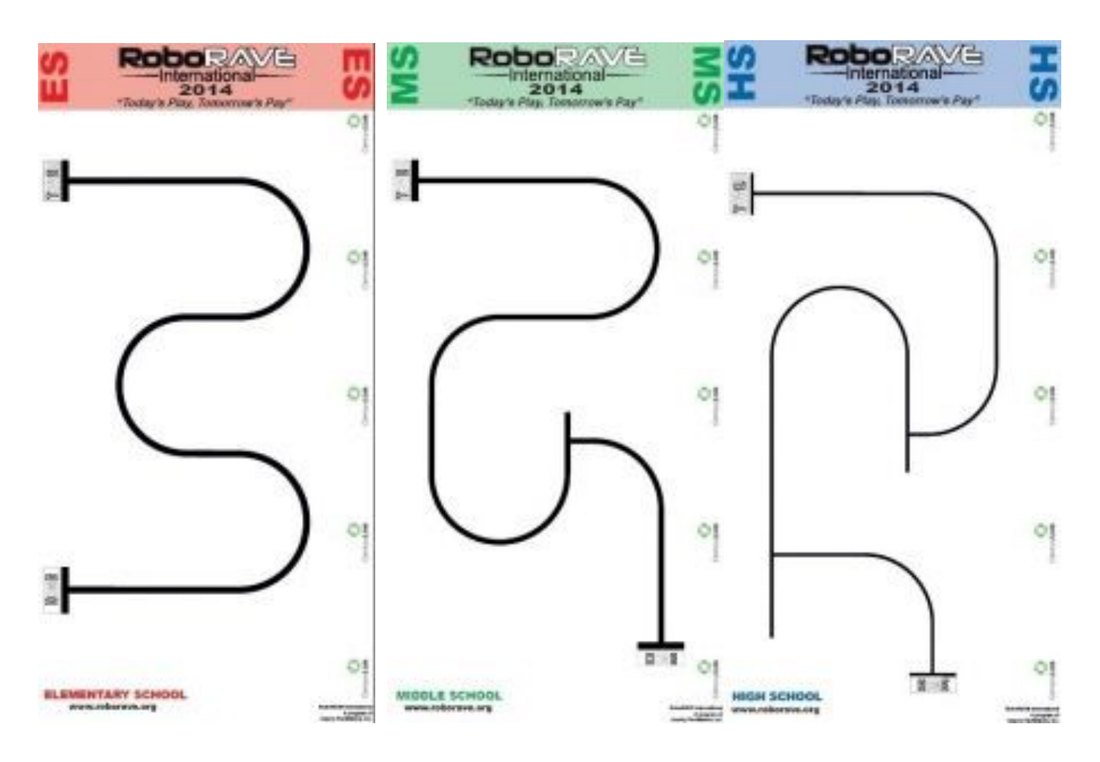
120 × 180 cm, 3 mm. ES: no intersections, 1.25 cm line. MS: one intersection, 1.25 cm line. HS/UP: two intersections, 0.75 cm line. A new design is revealed on the first day of the event.
Required balls
ES 75–125 · MS 125–200 · HS 200–250 · UP 100–350. The exact number per division is posted at the event.
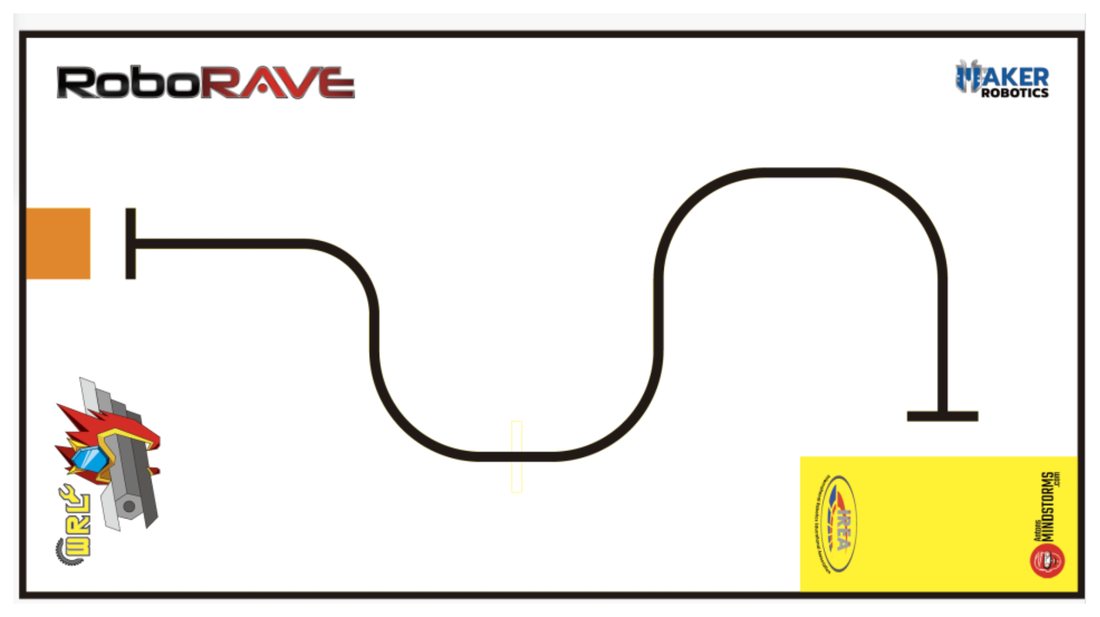
Example competition field — the robot starts from the orange start pad, follows the black line to the tower at the far end and returns.
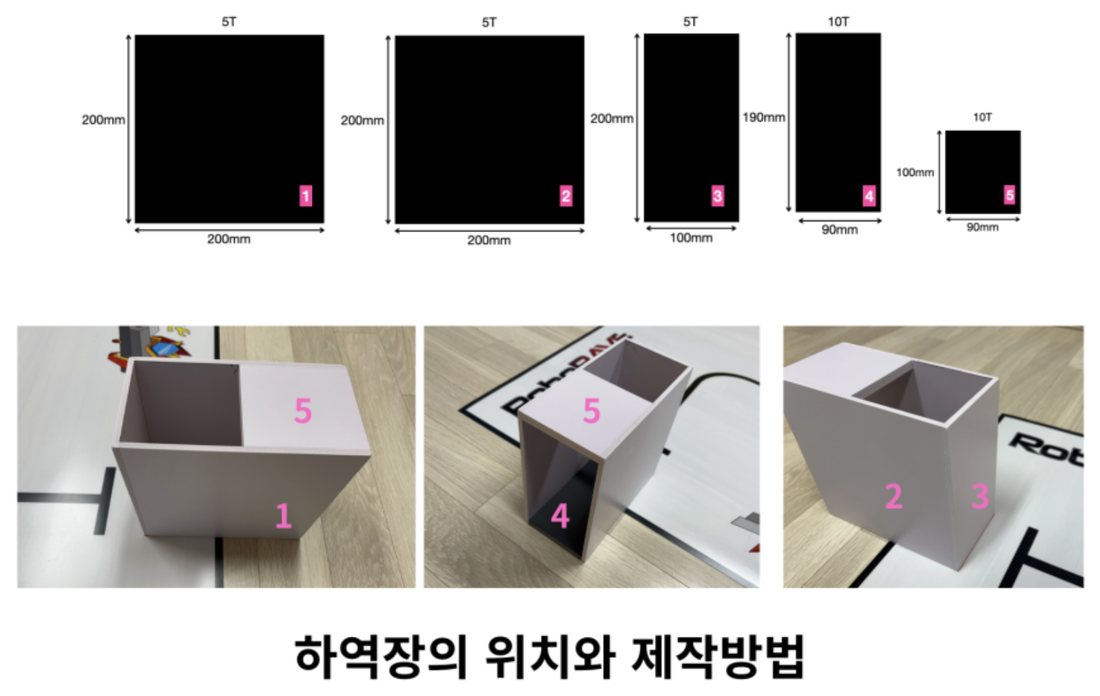
Tower (unloading station) construction
Panel
Size (W × H)
Thickness
1
200 × 200 mm
5T
2
200 × 200 mm
5T
3
100 × 200 mm
5T
4
90 × 190 mm
10T
5
90 × 100 mm
10T
Position and construction of the tower — five panels numbered 1 to 5. Panel 5 forms the top plate with the ball opening, and panel 4 closes the back; the tower is placed at the end of the line.
3-1A successful run is: travel from home to the tower, drop at least one ball, and travel back home. After that, Bonus Ball Runs may be performed — the robot travels to the tower and delivers the exact required number of balls (it does not need to return home during bonus runs). Delivering fewer balls than required gives that number as the bonus score; delivering more subtracts the excess from the required number.
Example tracks by division — Elementary (no intersections), Middle School (one intersection) and High School (two intersections). A new design is created each year and revealed on the first day of the event.
If a track monitor sees a team touch or reach into the tower, the run is stopped and the team receives only 400 points for completing the track, regardless of how many balls were delivered. No person may remove balls from the tower during delivery. Touching the robot at any time requires it to be picked up and returned to the start.
4SumoBot
Goal — design, build and program an autonomous robot that searches for and pushes the opposing Sumo robot off an elevated fighting ring.
Item
Specification
Divisions / weight classes
LEGO/VEX IQ 1 kg (ES) · Open 1 kg (ES/MS/HS/UP) · Open 3 kg (MS/HS/UP)
Robot
Autonomous, any platform, cost ≤ USD $1,500. Maximum size 25 × 18 cm with no height restriction, measured with articulated parts in the starting position.
Design restrictions
Articulated or moving parts are allowed (fins, sliding plates); deliberately destructive mechanisms such as abrasive rotors or hammers are not. Sumo robots must have no sharp parts or parts that may cause injury.
Ring
800 mm in diameter. Black (or white) circle with a 5 cm white border, on a board 13–20 mm thick, elevated 50–80 mm above the floor.
Match
Round-robin matches; a match ends once a team wins twice. 3 points for a win, 1 for a tie, 0 for a loss. 3 minutes per match — no winner within the time is scored as a tie. The top 8 teams in each category advance.
※ The ring diameter used at the RoboRAVE Korea Open is 800 mm. The RoboRAVE International rulebook (V6.2) specifies a 100 cm ring; the Korea Open figure above takes precedence for this competition.
4-1LEGO/VEX division — only the hardware (motors and sensors) and the controller must be official LEGO (SPIKE, EV3, NXT) or VEX (IQ). All other parts may be chosen freely.
Open division — metal bodies are prohibited. For the safety of participants, constructing the robot body from metal is not allowed.
4-2Activation and start — only one team member may approach the arena to activate the robot. Robots are placed on the markers designated by the referee; after both teams confirm the area is clear, the referees count down and the match begins. With a manual start, robots begin back-to-back at the centre, wait 3 seconds, move to the edge, touch it, then begin fighting.
4-3Falling criteria — the loser is the robot that leaves the ring first, defined as touching the surface on which the ring is placed. Partial contact with the floor counts as a fall and ends the round; a robot floating or suspended without floor contact does not. The referee may call a tie after 60 seconds, or force a restart after 5 seconds of "robots locked". Handlers must not touch their robots unless instructed by the referee, and the referee's decisions are final.
5MiddleBot
Purpose — waste sorting and resource recycling. Through proper sorting, plastics, metals, glass and paper can be reprocessed into new products, saving energy and reducing environmental damage. Teams program a robot to sort coloured blocks into matching zones. Divisions: MS & HS.
Item
Specification
Field
240 cm wide × 180 cm long. Signal light pole turning radius 60 cm.
Scoring blocks
Red, blue and green blocks, approximately 7 × 7 × 7 cm each. At the start a random number of blocks is placed in the centre of the field, with equal quantities of each colour.
Signal light pole
12 × 12 × 20 cm with a button on top; the front red area is the signal display.
Match
Each match lasts 2–5 minutes. A challenge-based system is used: each team may attempt 5 runs and the top 3 scores are recorded as the final result.
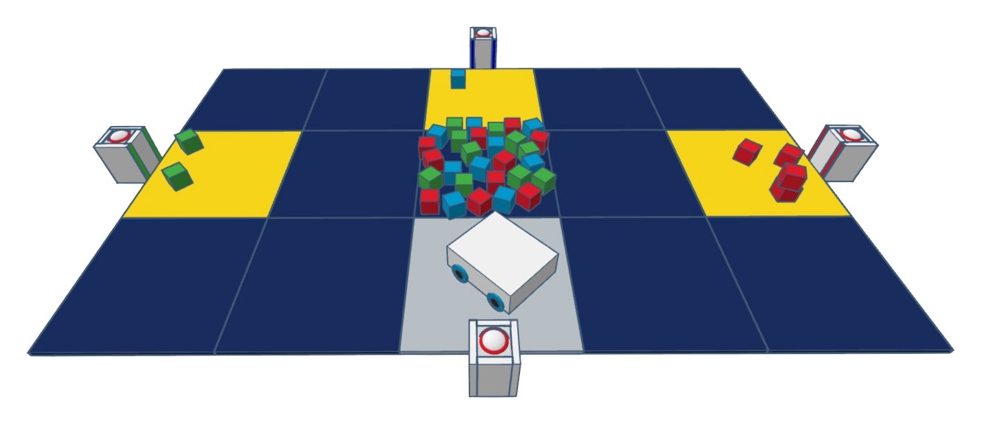
5-1The gray mat is the starting area and the robot must start from it. The match begins when the contestant uses the robot to press the signal light pole button behind the starting area — the countdown timer then starts. After the start, the robot must press the remaining signal light poles on the field; each press changes the light colour randomly among red, green and blue, and the contestant must set the poles so that all three colours appear.
5-2The robot moves the coloured blocks from the centre of the field onto the yellow mats. The colour of the blocks on each yellow mat must match the colour of the adjacent signal light pole — for example, if the LED next to a yellow mat is red, only red blocks may be placed there. Blocks may be laid flat or stacked, but the scoring method differs.
MiddleBot competition field — the gray starting mat, the yellow sorting mats and the signal light poles.
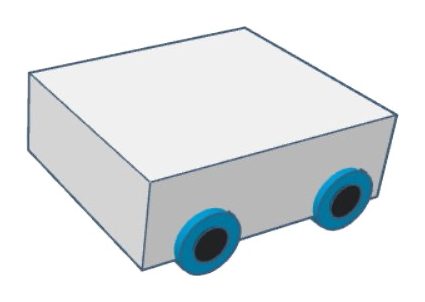
Example robot for the MiddleBot challenge.
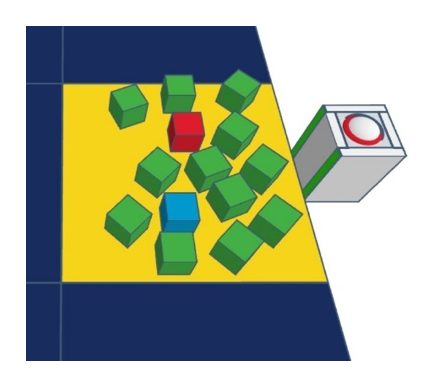
5-3Scoring — each correctly placed block on the matching mat scores base points. Stacking increases the score: layers × base score × multiplier, and the higher the stack the higher the multiplier (e.g. 9 unstacked blocks = 9 × base; a stack of 2 = (2 × base) × 2; a stack of 3 = (3 × base) × 3). A match ends when the countdown reaches zero, or when the robot returns to the starting area and presses the pole button to stop the timer.
Blocks correctly placed on the yellow mats matching the signal light colours — stacking multiplies the score.
5-4If time remains when the robot stops the timer, the remaining seconds are added to the score. However, if blocks are still left in the centre of the field, or blocks on the yellow mats do not match the signal light colour, the remaining time is not added. At the end of the match, if any ground-contact point of the robot touches the starting area mat, an additional bonus score is awarded for that round.
6SoccerBot RC
Goal — design, build and program two radio-controlled robots to play soccer.
Item
Specification
Divisions / weight
800 g class — ES · MS · HS
Robots
Two radio-controlled robots, any platform, cost ≤ USD $500 each team. Maximum dimensions 15 × 15 × 15 cm — no tolerance allowed. Battery powered; external power via cables is not permitted.
Ball handling
Shooting, grabbing, kicking or clamping mechanisms, sticky materials, solenoids, or any system that pushes or holds the ball are prohibited. A robot may enclose at most 30% of the ball's volume, leaving 70% exposed. Ball: 42.67 mm diameter, 45.93 g.
Match
Maximum 3 minutes, divided into two halves of 90 seconds; teams switch sides at half time with up to 30 seconds to do so. No extra time, time-outs or stoppage time. Game time stops when the ball leaves the field.
Field
1.20 m × 1.80 m, goals 0.50 m wide. Printed on durable paper, PVC vinyl (canvas) or 3 mm Trovicel.
SoccerBot RC field — 1.20 m × 1.80 m with 0.50 m goals.
6-1Points — 3 points to the winning team for scoring more goals; 3 points if the opposing team cannot continue due to damage or battery depletion, even if that team was leading; 3 points and three goals if the opposing team does not appear (walkover); 1 point for a draw; 0 points for a loss, if both teams cannot continue, or if neither team appears. Group-stage ties are decided by the highest number of goals scored, then by coin toss; in the single-elimination stage a tie is decided by golden goal.
6-25-second rule — if robots become entangled and cannot move, or if the ball is stuck in a corner and cannot move, the referee waits 5 seconds, then moves the ball to the centre of the field and instructs the teams to return their robots to their original starting positions before the match resumes.
6-3No touching the robots — even if a robot is flipped over or unable to move, neither the referee nor the participants may touch it. The only exception is when a goal is scored: robots may then be picked up and returned to their starting positions. In short, no one may touch a robot on the field unless a goal has been scored or the 5-second rule situation has occurred.
The following are violations of fair play, sanctioned with a goal awarded to the opposing team or disqualification: taking more than 30 seconds to restart after a stoppage; compromising the integrity of the competition; deliberately controlling the opposing team's robots; deliberate interference by a non-competing team or spectator; use of flammable devices; deliberately damaging the field or event setup; insulting the referee or the opposing team. It is strictly prohibited to glue, adhere or use suction to keep the ball attached to the robot. Robots must be clearly marked with the team name and number and may not be shared between teams.
※ The regulations for this competition may be subject to future revisions. Please check periodically for updates.
Inquiries
Please send inquiries to robot-league@naver.com or contact the association representative, Daewon LEE, on WhatsApp at +82 10 2604 3782.
공식 경기 규정
RoboRAVE Korea Open — 공식 규정
RoboRAVE 5개 종목 — 어메이징, 라인 팔로잉, 스모봇, 미들봇, 사커봇 RC. RoboRAVE International 공식 규정집(V6.2, 2026.06.06)을 기준으로 합니다.
RoboRAVE Korea Open은 5개 종목(어메이징, 라인 팔로잉, 스모봇, 미들봇, 사커봇 RC)으로 운영됩니다. 모든 종목은 RoboRAVE International 공식 규정집(V6.2, 2026.06.06)을 따릅니다. 아래 요약은 핵심 요건을 정리한 것이며, 링크된 공식 규정집이 최종 기준입니다.
부문 구분
ES · Elementary SchoolMS · Middle SchoolHS · High SchoolUP · University / Professional
1-1한 부문의 등록 팀이 5팀 미만인 경우, 대회 디렉터의 판단으로 부문을 통합할 수 있습니다.
RoboRAVE 핵심 가치
Have fun while learningSharingTeamworkRespectResponsibility
1-2모든 참가자는 항상 우호적이고 존중하는 태도를 유지해야 합니다. 제기할 사항은 서면으로 대회 디렉터 또는 조직위원회에 제출해야 하며, 트랙 마셜·심판·심사위원에게 항의하거나 위협하는 경우 경고·제재 또는 대회 퇴장 조치될 수 있습니다.
2어메이징
목표 — 지면에서 올라온 나무 미로를 떨어지지 않고 주행하는 로봇을 설계·제작·프로그래밍합니다. 제한 시간 내에 완주하면 보너스 점수가 추가됩니다.
항목
규격·내용
부문
ES · MS (HS는 경우에 따라 운영)
로봇
자율주행, 플랫폼 무관(LEGO, Abilix, VEX, Makeblock, Arduino, ESP32 등), 가액 USD $1,500 이하. 최소 바퀴 2개 + 캐스터(자유회전) 바퀴 1개.
부피
65,030 cm³ 이하
센서
자이로 센서 사용 금지. 미로 주행을 돕는 외부 센서는 사용할 수 없으며, 휠 엔코더는 허용됩니다.
경기 시간
2분 (120초 카운트다운)
트랙
파티클 보드 등, 폭 24cm × 높이 2cm, −45°·−90°·−135° 각도 회전 구간 포함. ES: 직선 4 + 회전 3. MS: 직선 6 + 회전 5.
득점
완주한 직선 구간당 50점, 각도 회전 구간당 100점(앞바퀴가 득점 라인에 닿아야 인정). ES 총 500점, MS 총 800점. 조기 완주 시 남은 시간 1초당 1점 보너스.
어메이징 트랙의 각도 회전 구간 — 허용되는 구성과 금지되는 구성.
로봇이 각도 회전 구간에 진입하고 빠져나오는 방향 — 빗변은 로봇이 회전해 들어오는 직선 구간 쪽에 붙입니다.
2-1결승선 전에 로봇이 미로에서 떨어졌고 시간이 남아 있으면, 출발선으로 되돌린 뒤 다시 시도할 수 있습니다. 바퀴 하나라도 트랙에서 완전히 벗어나거나 트랙 지지면에 닿으면 낙하로 판정합니다. 각 부문 상위 8팀이 결승 토너먼트에 진출합니다.
3라인 팔로잉
목표 — 흰 바탕의 검은 라인을 따라 타워까지 주행하여 공을 최소 1개 투입하고 출발 지점으로 돌아오는 라인 트레이싱 로봇을 제작합니다. 남은 시간에는 타워로 다시 이동해 부문별로 정해진 정확한 개수의 공을 투입합니다.
항목
규격·내용
부문
ES · MS · HS · UP ([LEGO/VEX IQ] 및 [오픈] 부문)
로봇
자율주행, 플랫폼 무관, 가액 USD $1,500 이하; 부피 65,030 cm³ 이하. 다중 센서·프로세서 사용 허용.
경기 시간
3분. 항상 라인 트레이싱 프로그램이 로봇을 제어해야 합니다.
타워
높이 20cm × 폭 10cm × 길이 35cm, 상단에 10 × 10cm 투입구, 후면 개방; 벨크로 테이프로 트랙에 고정. 투입 중 타워를 만질 수 없습니다.
트랙
120 × 180cm, 두께 3mm. ES: 교차점 없음, 라인 폭 1.25cm. MS: 교차점 1개, 라인 폭 1.25cm. HS/UP: 교차점 2개, 라인 폭 0.75cm. 트랙 디자인은 대회 첫날 공개됩니다.
필요 공 개수
ES 75~125 · MS 125~200 · HS 200~250 · UP 100~350. 부문별 정확한 개수는 대회 현장에서 공지됩니다.
경기장 예시 — 로봇은 주황색 출발 지점에서 출발해 검은 라인을 따라 반대편 타워까지 주행한 뒤 복귀합니다.
하역장(타워) 제작 방법
판재
크기 (가로 × 세로)
두께
1
200 × 200 mm
5T
2
200 × 200 mm
5T
3
100 × 200 mm
5T
4
90 × 190 mm
10T
5
90 × 100 mm
10T
하역장(타워)의 위치와 제작 방법 — 1~5번 판재로 구성됩니다. 5번이 공 투입구가 있는 윗판, 4번이 뒷면이며, 타워는 라인 끝에 배치합니다.
3-1성공적인 주행이란 출발점에서 타워까지 이동해 공을 최소 1개 투입하고 다시 출발점으로 돌아오는 것입니다. 이후에는 보너스 볼 런을 수행할 수 있으며, 타워로 이동해 부문별 요구 개수의 공을 정확히 투입합니다(보너스 런에서는 복귀 불필요). 요구 개수보다 적게 투입하면 그 개수가 보너스 점수가 되고, 많이 투입하면 초과분이 요구 개수에서 차감됩니다.
부문별 트랙 예시 — 초등부(교차점 없음), 중등부(교차점 1개), 고등부(교차점 2개). 트랙은 매년 새로 설계되며 대회 첫날 공개됩니다.
트랙 감독관이 참가자가 타워를 만지거나 손을 넣는 것을 확인하면 주행이 중단되며, 투입한 공의 개수와 관계없이 트랙 완주 점수 400점만 부여됩니다. 투입 중 누구도 타워에서 공을 꺼낼 수 없습니다. 로봇을 만진 경우에는 로봇을 들어 출발점으로 되돌려야 합니다.
4스모봇
목표 — 상대 스모 로봇을 탐색해 링 밖으로 밀어내는 자율주행 로봇을 설계·제작·프로그래밍합니다.
항목
규격·내용
부문·체급
LEGO/VEX IQ 1kg (ES) · 오픈 1kg (ES/MS/HS/UP) · 오픈 3kg (MS/HS/UP)
로봇
자율주행, 플랫폼 무관, 가액 USD $1,500 이하. 최대 크기 25 × 18cm(높이 제한 없음), 가동 부품은 시작 자세 기준으로 측정.
설계 제한
가동·관절 부품은 허용됩니다(핀, 슬라이딩 플레이트 등). 연마 로터·해머 등 의도적인 파괴 장치는 금지됩니다. 날카롭거나 부상을 유발할 수 있는 부품은 사용할 수 없습니다.
경기 링
지름 800mm. 검정(또는 흰색) 원형에 5cm 흰색 테두리, 두께 13~20mm 보드, 바닥에서 50~80mm 높이.
경기 방식
라운드 로빈 방식으로 진행하며, 한 팀이 2승을 거두면 매치가 종료됩니다. 승 3점, 무 1점, 패 0점. 매치당 3분이며 시간 내 승부가 나지 않으면 무승부 처리됩니다. 각 부문 상위 8팀이 진출합니다.
※ RoboRAVE Korea Open에서 사용하는 링 지름은 800mm입니다. RoboRAVE International 규정집(V6.2)에는 100cm로 명시되어 있으나, 본 대회에서는 위의 Korea Open 기준이 우선합니다.
4-1레고/벡스 부문 — 하드웨어(모터·센서)와 컨트롤러만 공식 레고(SPIKE, EV3, NXT) 또는 벡스(IQ) 제품을 사용하면 되며, 그 외 부품은 자유롭게 사용할 수 있습니다.
오픈 부문 — 금속 바디 금지. 참가자의 안전을 고려하여 로봇 바디를 금속으로 구성하는 것을 금지합니다.
4-2기동 및 시작 — 로봇 기동을 위해 경기장에 접근할 수 있는 인원은 팀당 1명입니다. 로봇은 심판이 지정한 마커 위에 놓고, 양 팀이 안전을 확인한 뒤 심판의 카운트다운과 함께 경기가 시작됩니다. 수동 시작의 경우 로봇은 중앙에서 등을 맞대고 시작해 3초 대기 후 가장자리로 이동해 접촉한 다음 경기를 시작합니다.
4-3낙하 판정 — 링을 먼저 벗어난 로봇이 패자이며, 링이 놓인 바닥면에 닿는 것을 기준으로 합니다. 바닥에 일부라도 닿으면 낙하로 인정되어 라운드가 종료되고, 바닥에 닿지 않고 떠 있는 상태는 낙하가 아닙니다. 심판은 60초 경과 후 무승부를 선언하거나, 로봇이 5초간 맞물린 상태면 재시작을 지시할 수 있습니다. 심판의 지시가 없는 한 로봇을 만질 수 없으며, 심판의 판정이 최종입니다.
5미들봇
목적 — 쓰레기 분리수거와 자원 재활용입니다. 올바른 분리를 통해 플라스틱·금속·유리·종이를 새 제품으로 재가공할 수 있어 에너지를 절약하고 환경 피해를 줄일 수 있습니다. 참가팀은 색상 블록을 알맞은 구역으로 분류하도록 로봇을 프로그래밍합니다. 부문: 중등부(MS)·고등부(HS).
항목
규격·내용
경기장
폭 240cm × 길이 180cm. 신호등 폴 회전 반경 60cm.
득점 블록
빨강·파랑·초록 블록, 각 약 7 × 7 × 7cm. 경기 시작 시 필드 중앙에 무작위 수량의 블록이 색상별로 동일한 개수로 배치됩니다.
신호등 폴
12 × 12 × 20cm, 상단에 버튼, 전면 적색 영역이 신호 표시부입니다.
경기 방식
각 경기 2~5분. 챌린지 방식으로 진행되며 팀당 5회 시도할 수 있고 상위 3회 점수가 최종 성적으로 기록됩니다.
5-1회색 매트가 출발 구역이며 로봇은 이 구역에서 출발해야 합니다. 참가자가 로봇으로 출발 구역 뒤의 신호등 폴 버튼을 누르면 경기가 시작되고 카운트다운 타이머가 작동합니다. 시작 후 로봇은 필드의 나머지 신호등 폴을 눌러야 하며, 누를 때마다 빨강·초록·파랑 중 무작위로 색이 바뀝니다. 참가자는 세 가지 색이 모두 나타나도록 폴을 조정해야 합니다.
5-2로봇은 필드 중앙의 색상 블록을 노란색 매트로 옮깁니다. 각 노란 매트에 놓는 블록의 색은 인접한 신호등 폴의 색과 일치해야 합니다 — 예를 들어 노란 매트 옆 LED가 빨간색이면 빨간 블록만 놓을 수 있습니다. 블록은 눕히거나 쌓을 수 있으며, 방식에 따라 점수 계산이 달라집니다.
미들봇 경기장 — 회색 출발 매트, 노란색 분류 매트, 신호등 폴.
미들봇 종목의 예시 로봇.
5-3득점 — 색이 맞는 매트에 올바르게 놓인 블록당 기본 점수를 얻습니다. 쌓으면 점수가 증가하며, 계산은 층수 × 기본 점수 × 배수이고 높이 쌓을수록 배수가 커집니다(예: 쌓지 않은 블록 9개 = 9 × 기본 점수, 2단 = (2 × 기본 점수) × 2, 3단 = (3 × 기본 점수) × 3). 경기는 카운트다운이 0이 되거나, 로봇이 출발 구역으로 돌아와 폴 버튼을 눌러 타이머를 정지시키면 종료됩니다.
신호등 색과 일치하도록 노란 매트에 올바르게 놓인 블록 — 쌓을수록 점수가 배가됩니다.
5-4로봇이 타이머를 멈췄을 때 시간이 남아 있으면 남은 초가 점수에 가산됩니다. 단, 필드 중앙에 블록이 남아 있거나 노란 매트의 블록이 신호등 색과 일치하지 않으면 남은 시간은 가산되지 않습니다. 경기 종료 시 로봇의 접지부가 출발 구역 매트에 닿아 있으면 해당 라운드에 추가 보너스 점수가 부여됩니다.
6사커봇 RC
목표 — 축구 경기를 수행하는 무선 조종 로봇 2대를 설계·제작·프로그래밍합니다.
항목
규격·내용
부문·중량
800g급 — ES · MS · HS
로봇
무선 조종 로봇 2대, 플랫폼 무관, 팀당 가액 USD $500 이하. 최대 크기 15 × 15 × 15cm — 허용 오차 없음. 배터리 구동만 가능하며 케이블을 통한 외부 전원은 금지됩니다.
볼 취급
발사·파지·킥·클램프 장치, 점착 소재, 솔레노이드 등 공을 밀거나 붙잡는 모든 장치는 금지됩니다. 로봇은 공 부피의 최대 30%까지만 감쌀 수 있으며 70%는 밖으로 노출되어야 합니다. 공: 지름 42.67mm, 무게 45.93g.
경기 방식
최대 3분, 90초씩 전·후반으로 나뉩니다. 하프타임에 진영을 교대하며 최대 30초가 주어집니다. 연장·타임아웃·추가시간은 없습니다. 공이 필드를 벗어나면 경기 시간이 정지됩니다.
경기장
1.20m × 1.80m, 골대 폭 0.50m. 내구성 용지, PVC 비닐(캔버스) 또는 3mm 트로비셀에 인쇄합니다.
사커봇 RC 경기장 — 1.20m × 1.80m, 골대 폭 0.50m.
6-1승점 — 더 많은 골을 넣어 승리한 팀 3점, 상대 팀이 파손·배터리 소진으로 경기를 계속할 수 없는 경우(상대가 앞서고 있었더라도) 3점, 상대 팀이 경기장에 나타나지 않은 경우(부전승) 3점과 3골 인정, 무승부 1점, 패배·양 팀 모두 속행 불가·양 팀 모두 미출전 시 0점. 조별 리그 동점은 총 득점이 많은 팀이 우선하며, 그래도 같으면 동전 던지기로 결정합니다. 토너먼트(단판) 단계의 동점은 골든골로 결정합니다.
6-25초 룰 — 로봇끼리 엉켜서 움직이지 않는 경우, 또는 공이 코너에 막혀 움직이지 못하는 경우, 심판은 5초간 기다린 후 공을 경기장 가운데로 옮기고 로봇을 최초 시작 위치로 이동시키도록 지시한 뒤 경기를 재개합니다.
6-3로봇 접촉 금지 — 로봇이 뒤집어지거나 움직이지 못하는 경우에도 심판과 참가자는 로봇에 손을 대면 안 됩니다. 단, 골이 들어간 경우에는 로봇을 들어 시작 위치로 이동할 수 있습니다. 즉, 골 또는 5초 룰 상황이 발생하지 않는 이상 경기장의 로봇에 손을 대면 안 됩니다.
다음은 페어플레이 위반으로, 상대 팀에 골을 부여하거나 실격 처리됩니다: 경기 중단 후 재개까지 30초 초과, 대회의 공정성을 훼손하는 행위, 상대 팀 로봇을 고의로 조종하는 행위, 경기에 참여하지 않는 팀이나 관중의 고의적 방해, 인화성 장치 사용, 경기장·시설의 고의 훼손, 심판이나 상대 팀에 대한 모욕. 접착제·점착·흡착 등으로 공을 로봇에 붙이는 행위는 엄격히 금지됩니다. 로봇에는 팀명과 번호를 명확히 표시해야 하며 팀 간 공유는 금지됩니다.
Cinco desafíos de RoboRAVE: a-MAZE-ing, Line Following, SumoBot, MiddleBot y SoccerBot RC. Basado en el reglamento oficial de RoboRAVE International Challenges (V6.2, 06.06.2026).
El RoboRAVE Korea Open cuenta con cinco desafíos: a-MAZE-ing, Line Following, SumoBot, MiddleBot y SoccerBot RC. Todos siguen el reglamento oficial Rules of RoboRAVE International Challenges (V6.2, 06.06.2026). Los resúmenes siguientes cubren los requisitos esenciales; el reglamento oficial enlazado es el documento autorizado.
Divisiones
ES · Elementary SchoolMS · Middle SchoolHS · High SchoolUP · University / Professional
1-1Si hay menos de 5 equipos inscritos en una división, el Director del Evento puede combinar divisiones.
Valores fundamentales de RoboRAVE
Have fun while learningSharingTeamworkRespectResponsibility
1-2El comportamiento debe ser amable y respetuoso en todo momento. Cualquier asunto debe presentarse por escrito al Director del Evento o al Comité Organizador; enfrentarse o acosar a un comisario de pista, árbitro o juez puede acarrear advertencia, sanción o expulsión del evento.
2a-MAZE-ing
Objetivo: diseñar, construir y programar un robot que recorra un laberinto de madera elevado sin caerse. Completarlo antes del límite de tiempo suma puntos de bonificación.
Ítem
Especificación
Divisiones
ES · MS (HS ocasionalmente)
Robot
Autónomo, cualquier plataforma (LEGO, Abilix, VEX, Makeblock, Arduino, ESP32, etc.), valor ≤ 1.500 USD. Mínimo dos ruedas más una rueda loca.
Volumen
≤ 65.030 cm³
Sensores
Los sensores giroscópicos están prohibidos. No pueden usarse sensores externos para seguir el laberinto; se permiten los encoders de rueda.
Tiempo
2 minutos (cuenta atrás de 120 segundos)
Pista
Aglomerado o similar, 24 cm de ancho × 2 cm de alto, con giros de −45°, −90° y −135°. ES: 4 rectas + 3 giros. MS: 6 rectas + 5 giros.
Puntuación
50 puntos por cada tramo recto completado y 100 por cada giro angular (las ruedas delanteras deben tocar la línea de puntuación). ES: 500 puntos; MS: 800 puntos. Terminar antes suma 1 punto por cada segundo completo restante.
Giros angulares de la pista a-MAZE-ing: configuraciones permitidas y prohibidas.
Cómo entra y sale el robot de un giro angular: la hipotenusa se coloca contra el tramo recto desde el que gira el robot.
2-1Si el robot se cae antes de la meta y queda tiempo, devuélvalo a la línea de salida e inténtelo de nuevo. Se considera caída cuando cualquier rueda está completamente fuera de la pista o toca la superficie que la sostiene. Los ocho mejores equipos de cada división avanzan al torneo final.
3Line Following
Objetivo: construir un robot seguidor de línea que siga una línea negra sobre fondo blanco hasta una torre, entregue al menos una pelota y regrese al punto de partida. En el tiempo restante vuelve a la torre para entregar el número exacto de pelotas requerido para su división.
Ítem
Especificación
Divisiones
ES · MS · HS · UP (categorías [LEGO/VEX IQ] y [Open])
Robot
Autónomo, cualquier plataforma, coste ≤ 1.500 USD; volumen ≤ 65.030 cm³. Se permiten múltiples sensores y procesadores.
Tiempo
3 minutos. Un programa seguidor de línea debe controlar el robot en todo momento.
Torre
20 cm de alto × 10 cm de ancho × 35 cm de largo, con una abertura de 10 × 10 cm arriba y parte trasera abierta; fijada a la pista con velcro. No se puede tocar la torre durante la entrega.
Pista
120 × 180 cm, 3 mm. ES: sin intersecciones, línea de 1,25 cm. MS: una intersección, línea de 1,25 cm. HS/UP: dos intersecciones, línea de 0,75 cm. El nuevo diseño se revela el primer día del evento.
Pelotas requeridas
ES 75–125 · MS 125–200 · HS 200–250 · UP 100–350. El número exacto por división se publica en el evento.
Ejemplo de campo de competición: el robot parte de la zona naranja de salida, sigue la línea negra hasta la torre del extremo opuesto y regresa.
Construcción de la torre (zona de descarga)
Panel
Tamaño (An × Al)
Grosor
1
200 × 200 mm
5T
2
200 × 200 mm
5T
3
100 × 200 mm
5T
4
90 × 190 mm
10T
5
90 × 100 mm
10T
Posición y construcción de la torre: cinco paneles numerados del 1 al 5. El panel 5 forma la placa superior con la abertura para las pelotas y el 4 cierra la parte trasera; la torre se coloca al final de la línea.
3-1Una carrera exitosa es: viajar desde la salida hasta la torre, soltar al menos una pelota y volver a la salida. Después pueden realizarse Bonus Ball Runs: el robot va a la torre y entrega el número exacto de pelotas requerido (no necesita volver durante estas rondas). Entregar menos pelotas de las requeridas da ese número como puntuación de bonificación; entregar más resta el exceso del número requerido.
Pistas de ejemplo por división: Primaria (sin intersecciones), Secundaria (una intersección) y Bachillerato (dos intersecciones). Cada año se crea un nuevo diseño, revelado el primer día del evento.
Si un monitor de pista ve que un equipo toca o mete la mano en la torre, la carrera se detiene y el equipo recibe solo 400 puntos por completar la pista, sin importar cuántas pelotas haya entregado. Nadie puede retirar pelotas de la torre durante la entrega. Tocar el robot en cualquier momento obliga a recogerlo y devolverlo a la salida.
4SumoBot
Objetivo: diseñar, construir y programar un robot autónomo que busque y empuje al robot Sumo contrario fuera de un ring elevado.
Ítem
Especificación
Divisiones / categorías de peso
LEGO/VEX IQ 1 kg (ES) · Open 1 kg (ES/MS/HS/UP) · Open 3 kg (MS/HS/UP)
Robot
Autónomo, cualquier plataforma, coste ≤ 1.500 USD. Tamaño máximo 25 × 18 cm sin restricción de altura, medido con las partes articuladas en posición inicial.
Restricciones de diseño
Se permiten partes articuladas o móviles (aletas, placas deslizantes); no los mecanismos deliberadamente destructivos como rotores abrasivos o martillos. Los robots Sumo no deben tener piezas afiladas ni que puedan causar lesiones.
Ring
800 mm de diámetro. Círculo negro (o blanco) con borde blanco de 5 cm, sobre un tablero de 13–20 mm de grosor, elevado 50–80 mm del suelo.
Partido
Partidos de todos contra todos; el encuentro termina cuando un equipo gana dos veces. 3 puntos por victoria, 1 por empate, 0 por derrota. 3 minutos por encuentro; sin ganador dentro del tiempo se anota empate. Los 8 mejores de cada categoría avanzan.
※ El diámetro del ring utilizado en el RoboRAVE Korea Open es de 800 mm. El reglamento de RoboRAVE International (V6.2) indica 100 cm; para esta competición prevalece la medida del Korea Open indicada arriba.
4-1División LEGO/VEX: solo el hardware (motores y sensores) y el controlador deben ser LEGO oficial (SPIKE, EV3, NXT) o VEX (IQ). El resto de las piezas puede elegirse libremente.
División Open: prohibidos los cuerpos metálicos. Por la seguridad de los participantes, no se permite construir el cuerpo del robot con metal.
4-2Activación e inicio: solo un miembro del equipo puede acercarse a la arena para activar el robot. Los robots se colocan en las marcas designadas por el árbitro; tras la confirmación mutua de que el área está despejada, los árbitros hacen la cuenta atrás y comienza el combate. Con inicio manual, los robots empiezan espalda con espalda en el centro, esperan 3 segundos, van al borde, lo tocan y entonces comienzan a luchar.
4-3Criterio de caída: pierde el robot que abandona primero el ring, definido como tocar la superficie sobre la que este se apoya. El contacto parcial con el suelo cuenta como caída y termina la ronda; un robot suspendido sin contacto con el suelo, no. El árbitro puede declarar empate tras 60 segundos o forzar un reinicio tras 5 segundos de "robots trabados". Los manipuladores no deben tocar sus robots salvo indicación del árbitro, y las decisiones arbitrales son inapelables.
5MiddleBot
Propósito: separación de residuos y reciclaje de recursos. Con una clasificación adecuada, plásticos, metales, vidrio y papel pueden reprocesarse en nuevos productos, ahorrando energía y reduciendo el daño ambiental. Los equipos programan un robot para clasificar bloques de colores en las zonas correspondientes. Divisiones: MS y HS.
Ítem
Especificación
Campo
240 cm de ancho × 180 cm de largo. Radio de giro del poste de señal: 60 cm.
Bloques de puntuación
Bloques rojos, azules y verdes de aproximadamente 7 × 7 × 7 cm cada uno. Al inicio se coloca en el centro del campo un número aleatorio de bloques, con cantidades iguales de cada color.
Poste de señal
12 × 12 × 20 cm con un botón en la parte superior; el área roja frontal es la pantalla de señal.
Partido
Cada partido dura 2–5 minutos. Se usa un sistema de retos: cada equipo puede realizar 5 intentos y se registran las 3 mejores puntuaciones como resultado final.
5-1La alfombrilla gris es el área de salida y el robot debe partir de ella. El partido comienza cuando el concursante usa el robot para pulsar el botón del poste de señal detrás del área de salida; entonces arranca la cuenta atrás. Tras el inicio, el robot debe pulsar los demás postes del campo; cada pulsación cambia el color aleatoriamente entre rojo, verde y azul, y el concursante debe ajustarlos para que aparezcan los tres colores.
5-2El robot traslada los bloques de colores desde el centro del campo a las alfombrillas amarillas. El color de los bloques en cada alfombrilla amarilla debe coincidir con el del poste de señal adyacente: por ejemplo, si el LED junto a una alfombrilla es rojo, solo pueden colocarse bloques rojos. Los bloques pueden colocarse planos o apilados, pero el método de puntuación difiere.
Campo de competición de MiddleBot: la alfombrilla gris de salida, las alfombrillas amarillas de clasificación y los postes de señal.
Robot de ejemplo para el desafío MiddleBot.
5-3Puntuación: cada bloque correctamente colocado en la alfombrilla del color correspondiente otorga puntos base. Apilar aumenta la puntuación: capas × puntuación base × multiplicador, y cuanto más alta la pila mayor el multiplicador (p. ej., 9 bloques sin apilar = 9 × base; una pila de 2 = (2 × base) × 2; una de 3 = (3 × base) × 3). El partido termina cuando la cuenta atrás llega a cero o cuando el robot vuelve al área de salida y pulsa el botón del poste para detener el cronómetro.
Bloques colocados correctamente en las alfombrillas amarillas según el color de la señal: apilarlos multiplica la puntuación.
5-4Si queda tiempo cuando el robot detiene el cronómetro, los segundos restantes se suman a la puntuación. Sin embargo, si aún quedan bloques en el centro del campo o los bloques de las alfombrillas amarillas no coinciden con el color de la señal, el tiempo restante no se suma. Al final del partido, si algún punto de contacto con el suelo del robot toca la alfombrilla de salida, se concede una bonificación adicional en esa ronda.
6SoccerBot RC
Objetivo: diseñar, construir y programar dos robots radiocontrolados para jugar al fútbol.
Ítem
Especificación
Divisiones / peso
Clase de 800 g — ES · MS · HS
Robots
Dos robots radiocontrolados, cualquier plataforma, coste ≤ 500 USD por equipo. Dimensiones máximas 15 × 15 × 15 cm — sin tolerancia. Alimentados por batería; no se permite energía externa por cable.
Manejo del balón
Se prohíben mecanismos de disparo, agarre, patada o sujeción, materiales adhesivos, solenoides o cualquier sistema que empuje o retenga el balón. Un robot puede envolver como máximo el 30% del volumen del balón, dejando el 70% expuesto. Balón: 42,67 mm de diámetro, 45,93 g.
Partido
Máximo 3 minutos, divididos en dos tiempos de 90 segundos; los equipos cambian de lado en el descanso, con hasta 30 segundos para hacerlo. Sin prórroga, tiempos muertos ni descuento. El tiempo se detiene cuando el balón sale del campo.
Campo
1,20 m × 1,80 m, porterías de 0,50 m. Impreso en papel duradero, vinilo PVC (lona) o Trovicel de 3 mm.
Campo de SoccerBot RC: 1,20 m × 1,80 m con porterías de 0,50 m.
6-1Puntos: 3 puntos al equipo ganador por marcar más goles; 3 puntos si el rival no puede continuar por daños o batería agotada, aunque fuera por delante; 3 puntos y tres goles si el rival no se presenta; 1 punto por empate; 0 puntos por derrota, si ambos equipos no pueden continuar o si ninguno se presenta. Los empates en la fase de grupos se deciden por mayor número de goles y luego a cara o cruz; en la fase eliminatoria, por gol de oro.
6-2Regla de los 5 segundos: si los robots se enredan y no pueden moverse, o si el balón queda atascado en una esquina, el árbitro espera 5 segundos, coloca el balón en el centro del campo e indica a los equipos que devuelvan sus robots a sus posiciones iniciales antes de reanudar el partido.
6-3Prohibido tocar los robots: aunque un robot esté volcado o no pueda moverse, ni el árbitro ni los participantes pueden tocarlo. La única excepción es cuando se marca un gol: entonces los robots pueden recogerse y devolverse a sus posiciones de salida. En resumen, nadie puede tocar un robot en el campo salvo que se haya marcado un gol o se haya producido la situación de la regla de los 5 segundos.
Lo siguiente infringe el juego limpio y se sanciona con un gol para el rival o la descalificación: tardar más de 30 segundos en reanudar tras una parada; comprometer la integridad de la competición; controlar deliberadamente los robots del equipo contrario; interferencia deliberada de un equipo que no compite o de un espectador; uso de dispositivos inflamables; dañar deliberadamente el campo o el montaje del evento; insultar al árbitro o al equipo rival. Está estrictamente prohibido pegar, adherir o usar succión para mantener el balón unido al robot. Los robots deben llevar claramente el nombre y número del equipo y no pueden compartirse entre equipos.
※ El reglamento de esta competición puede ser revisado en el futuro. Consulte periódicamente las actualizaciones.
Consultas
Envíe sus consultas a robot-league@naver.com o contacte al representante de la asociación, Daewon LEE, por WhatsApp al +82 10 2604 3782.
RoboRAVE Korea Openは5種目(a-MAZE-ing、ラインフォローイング、スモボット、ミドルボット、サッカーボットRC)で運営されます。すべての種目はRoboRAVE International公式規定集(V6.2, 2026.06.06)に従います。以下の要約は主要な要件をまとめたもので、リンク先の公式規定集が最終的な基準です。
部門区分
ES · Elementary SchoolMS · Middle SchoolHS · High SchoolUP · University / Professional
1-1いずれかの部門で登録チームが5チーム未満の場合、大会ディレクターの判断で部門を統合できます。
RoboRAVEの中核的価値
Have fun while learningSharingTeamworkRespectResponsibility