
Official Competition Rules

Robot Battle Othello — Official Rules

A strategic robot-control competition — flip two-color mission blocks to your own color and earn points. 1:1 or 2:2 tournament in Junior (U-12) and Senior (U-18) divisions, single Lightweight (Pro) class.

Verification of Regulations — Sangbok Park, Chief Judge of IREA

Robot Battle Othello — Official Rules

1Overview

"Robot Battle Othello" is a strategic robot-control competition. Participants drive robots to flip two-color "mission blocks" to their own color and earn points. The event runs as a 1:1 or 2:2 tournament and is intended as a festival in which participants respect each other, share skills, and enjoy the experience together. Participants compete in two age divisions — Junior (U-12) and Senior (U-18) — and both divisions run under a single class: Lightweight (Pro).

※ Robot Battle Othello comprises four divisions: Othello Junior, Othello Senior, AI Othello Junior and AI Othello Senior. The AI Othello divisions are currently planned (TBA) — they are problem-solving divisions using an AI camera, and their detailed rules will be announced separately. The rules on this page apply to the Othello Junior/Senior divisions.
※ The tournament format may change depending on the number of participants on the day of the event.

2Participant Classification

2-0. Division structure

DivisionAgeStatus
Othello JuniorU-12 (12 years old or under)Open — rules on this page
Othello SeniorU-18 (18 years old or under)Open — rules on this page
AI Othello JuniorU-12Planned (TBA) — problem solving with an AI camera
AI Othello SeniorU-18Planned (TBA) — problem solving with an AI camera

2-1. Divisions (Othello Junior / Senior)

CategoryJuniorSenior
AgeU-12 (12 years old or under)U-18 (18 years old or under)
ClassLightweight (Pro)Lightweight (Pro)

2-2. Class

2-2-1Both Junior and Senior participants compete in a single class: Lightweight (Pro). Both retail products and self-made robots are permitted.
2-2-2If a retail product is used, all components must remain in their original state. Mixing parts from multiple retail products is prohibited; only parts from a single product may be used. However, batteries, battery cases, cables, communication modules, and decorative pieces from other products are allowed.

3Robot Standards

3-1All participants must have their robot fully assembled before the competition. Only robots that pass the "Standards Inspection" performed prior to matches are eligible to compete.

3-2. Lightweight (Pro) specifications — Junior & Senior

ItemLightweight (Pro) — common to Junior & Senior
Weight≤ 500g (up to +3g excess allowed). Retail product or self-made robot.
Overall sizeWithin 25 × 25 × 25 cm (W × L × H)
Defense structure width25 cm or less (only one side of front/rear/left/right may be used)
Battery11.7V or less. No restriction on battery type (commercial / safety-certified only).
MotorUnlimited
Approved retail productsprobo, roborobo, META, CUBO, KAIROBOT, OLLO, DREAM, Robotry, TRobot, etc. (please inquire for other ready-made robots)

3-3. Defense structure

3-3-1The "defense structure" refers to any part that touches the arena floor other than the wheels. Only one of the four sides (front, rear, left, right) of the robot may be used as the defense structure, and all parts other than wheels and the defense structure must be kept above the arena floor.
3-3-2The defense structure width is measured as the maximum straight-line width of the parts touching the floor, and must not exceed 25 cm. Defense structures that can change during the match, such as a "lift structure," are permitted. For special structures, please inquire in advance with photographs attached.

3-4. Surface and other restrictions

3-4-1Non-anodized conductive materials are prohibited on the robot's surface. No sharp or pointed parts that could cause injury are allowed. Surfaces and the folding sections of joints must be rounded, and their shape must be maintained throughout the match.
3-4-2Adhesive material on the robot's surface (including tires) is only permitted if an A4 paper attached and removed from the adhesive surface remains undamaged and leaves no residue. Metal parts are prohibited on the robot's outer shell, except for metal bolts used for fastening.
Robots equipped with the following structures are not permitted to compete: sharp or pointed structures, knives, saw blades, high-speed rotating devices, lasers, electric-shock devices, adhesion structures, launching mechanisms, liquid or flame. Robots that could cause excessive damage to people, equipment, or the arena are also prohibited.

3-5. Wireless communication

3-5-1All wireless communication methods are allowed, except wired communication (IR, Bluetooth, RF, and RC are all permitted). To avoid radio interference, participants must use a frequency range different from that of the opposing team. The participant is responsible for malfunctions caused by multiple-frequency interference; deliberately interfering with the opponent's operation is prohibited and may result in suspension of wireless use.

3-6. Power regulations

3-6-1Only commercially available, safety-certified batteries may be used. AC power, liquid fuel, and combustion engines are prohibited for safety reasons. Robots in the Lightweight (Pro) class may use any battery type up to 11.7V or less. Self-assembled, refurbished, or swollen batteries are strictly prohibited.
3-6-2If charging is required at the venue, only chargers equipped with a "Balance Charge" function are permitted. Batteries must be placed inside a Li-Po Guard Safe Bag when charging or storing — double-bagging is recommended, and participants are strongly encouraged to wear safety goggles while charging. Batteries mounted on the robot must be placed in the safest possible location and covered with a "safety cover" that can be easily removed in an emergency.
3-6-3If a battery problem occurs, the robot may be immediately removed from the arena and disposed of for safety. All resulting responsibility lies with the participant.

3-7 & 3-8. Motor & standards inspection

3-7-1There is no motor-torque limitation for the Lightweight (Pro) class (Unlimited). Please inquire in advance for the use of any special motor types.
3-8-1All participating robots must complete the "Standards Inspection" within the designated time; robots that fail to meet the standards will be disqualified. If modifications are required after inspection, re-inspection must be completed within the designated time — failure to do so results in disqualification. Inspection is conducted with the robot powered on and held in its "standard posture." The participant is responsible for measurement errors caused by improper fixation. Bring a remote controller if needed.

4Match Regulations

4-1. Competition method

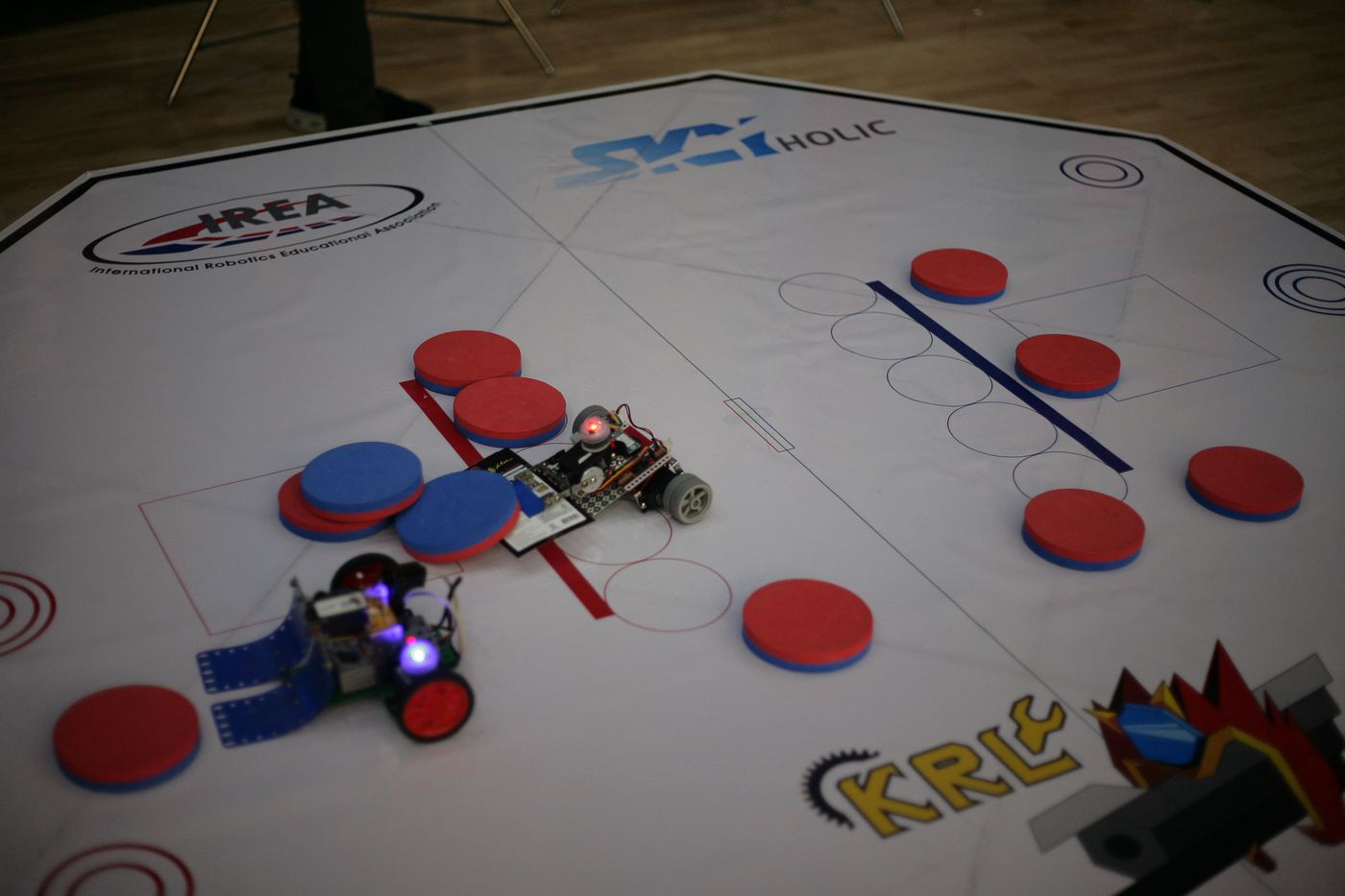
4-1-1A total of 11 mission blocks — each with two different colors — are used. The objective is to flip all the blocks to show your own color. Layout: 5 mission blocks in your territory, 5 in the opponent's territory, and 1 in the central neutral zone.
4-1-2Each match lasts 2 minutes. If a team flips all 11 blocks to its own color and reaches 11 points first, a "cold game" is declared and that team wins. At the end of the match, 1 point is awarded for each matched color; the team with more points wins. If a "disqualification loss" or "forfeit loss" is declared, the match ends immediately.

4-2. Scoring

4-2-1The criteria for points and the final authority for judgment lie with the referee. A mission block must be completely touching the ground to count as a point — a point is not awarded if the robot or block is resting on top of another object.
4-2-2Each participant's first warning is verbal. Each subsequent accumulated warning grants the opposing team 1 additional point (added to their score after the match).

4-3. Start of the game

4-3-1The robot starts from a designated position on the "square line" drawn on the floor, facing the opponent's territory. On the referee's start signal, the robot must turn 180° and remove the "start target" (yellow rubber cone) from the arena to officially begin the match.
4-3-2If the start target is not removed and the robot makes contact with a mission block or the opponent's robot, it is considered a "start violation" and immediate disqualification is declared.

4-4 & 4-5. Slipdown & ring-out

4-4-1Parts other than the wheels and one side of the lift structure must not touch the arena floor — violations result in a "slipdown" declaration, and intentional slipdowns are penalized with a warning. If a robot is in a slipdown state during the match, 2 minutes of repair time is granted; every 2 minutes of repair time results in a 1-point penalty. If repairs are not possible, the violation results in a "disqualification loss."
4-5-1If a robot falls out of the arena on its own, it is declared "ring out" and disqualified. If a mission block belonging to your team is knocked out of the arena, the team is declared "ring out" and disqualified. If a mission block knocked out by the opponent hits your team's robot, the match is immediately stopped, the block is returned to its previous position, and the match resumes from the starting position.

4-6 & 4-7. Time & standing-down

4-6-1Participants may request a "time" from the referee in case of a rule violation, malfunction, or other robot issue. A 2-minute repair time is granted; every 2 minutes results in a 1-point penalty. A "time" requested for an important proposal or objection is not penalized; however, if the referee does not accept it as a valid time, a warning is given.
4-7-1If a robot does not move for more than 5 seconds, the referee may immediately declare "standing down." If the robot does not recover within a 5-count after the declaration, it is treated as a KO loss. In "pair" (2:2) matches, standing-down is not declared and the match continues. Even if some robots are flipped over or unable to move, the referee may choose, at their discretion, not to declare standing-down and allow the match to continue.

4-8. Attack regulations

4-8-1Basic blocking while in motion is allowed. However, all forms of attack — pushing, grabbing, pulling, lifting, and flipping — are prohibited. Rotary weapons, drum-type weapons, and related components are not allowed; violations result in the match being stopped and the attacking robot receiving a warning or immediate disqualification. If a team flips or pushes the opponent's robot out of the arena, the attacking team is disqualified for violating the attack regulations.

4-9. Driving regulations

4-9-1During driving, only the wheels and one side of the defense structure may be in contact with the ground. Violations result in 2 minutes of repair time and a 1-point penalty; if repairs are not possible, the robot is disqualified. Robots must be able to move normally in at least two of the four directions (forward, backward, left, right). The referee may request a verification test before or during the match, and robots that fail will be disqualified.

4-10. Other regulations

4-10-1When a match is restarted after being stopped, or at the beginning of the match, it always resumes from the initial start position — intentional violations result in a warning. If the battery of a robot becomes even slightly detached during the match, the match is immediately stopped and 2 minutes of repair time is granted (1-point penalty after the match); if repairs are not possible, a TKO loss is declared.
4-10-2Participants must not touch their robot during the match without the referee's permission (warning or disqualification at the referee's discretion). Overly defensive play may result in a warning. When the referee signals "stop," participants must immediately stop operating and halt their robots. If all robots from both teams become entangled and the match cannot proceed, the referee may declare a "stop" — the match then restarts from the start position, and participants must immediately cut motor power.
4-10-3In the case of referee error or difficult judgment, video review and discussion among the main and assistant referees may lead to a reversal of decisions and results. The referee retains the authority to reverse decisions and restart a match even after a win-or-loss declaration if a clear error or new evidence is found. If a participant or related person challenges, disrespects, or protests the referee's authority, a warning is given on the first offense; continued non-compliance results in immediate disqualification. When the referee explains a ruling or rule, participants must acknowledge understanding with a simple nod and "yes."

4-11. Match terminology

The following terms are used during matches. Participants should familiarize themselves with these terms in advance.

레디 · Ready스타트 · Start득점 · Point노카운트 · No-Count스탠딩다운 · Standing-down링 아웃 · Ring-out토크오프 · Torque-Off떨어져 · Distance경고 · Yellow-Card타임 · Time스톱 · Stop그만 · Game-Over승 · Win차렷 · Attention인사 · Bow디스퀄리피 · Disqualify
4-12Any issues not specified in these regulations will be decided in consultation with the judges on the day of the competition.

5Robot Modifications

5-1If a robot needs modification due to a defect after the standards inspection, it must be done with the referee's permission (in-match modification results in a 1-point penalty). Unauthorized modifications result in disqualification.

6Evaluation Method

6-1-1Within the allotted time, the team with more points, or one that achieves a decision victory, disqualification win, or forfeit win, is declared the winner. Depending on the situation, a "rumble" match involving multiple robots may be held to determine rankings — in a rumble, even fallen robots may be attacked; any participant who is rung out or downed is immediately eliminated, and the last robot remaining in the arena wins.

6-2. Tie evaluation

6-2-1If both teams score simultaneously and the match ends in a tie, the team that scores the next additional point wins that round. If the match remains tied, a 1-minute overtime begins immediately with no battery replacement or repair time — the team that scores 1 point first wins on a "golden point." Warnings not converted to points in the main match carry over to overtime. If overtime is still tied, the winner is determined by the following priority: (1) fewer warnings, (2) lower total robot weight, (3) younger total team age.

6-3. Disqualification

6-3-1Competing with another participant's robot; disobeying the referee's instructions or decisions; violating robot specifications during the match; leaving the arena or the designated waiting area without the referee's permission; using profanity or engaging in violent behavior; engaging in disruptive or cheating behavior; or failing to compete after all other matches have ended. Records of disqualified participants will not be recognized.
6-3-2Modifying the robot's motor, weight, or size during the match to violate the regulations results in deletion of all awards and permanent suspension from future participation.

7Arena & Mission Blocks

ItemSpecification
Arena sizeApprox. 198 × 198 × 30 cm (tolerance ±5%). Built from 22T coated plywood with a PET floor.
Mission block (circular)Diameter 12cm × thickness 20T, ≤ 25g, EVA foam, different color on each side.
Mission block (center)12 × 12 cm × 20T, ≤ 30g, EVA foam.
Mission block layout5 in own territory + 5 in opponent's territory + 1 in the central neutral zone = 11 in total.
Start targetRubber cone, 13 × 18 cm (≤ 30g) or 8 × 8 cm (≤ 15g).
7-1The arena is built from five 70 × 70 cm 22T coated square plywood pieces and four 70 × 70 cm 22T equilateral-triangle coated plywood pieces. The arena floor is PET.
7-2The start target is placed within a designated circle (8~13cm in diameter) located on the rear edge behind the start position. The robot's start position is the designated spot inside its own team's area. (7-3)
If all official matches finish early, "rumble" and other event matches may be held for all participants. (8-1)
※ The regulations for this competition may be subject to future revisions. Please check periodically for updates.

Inquiries

Please send inquiries to robot-league@naver.com or contact the association representative, Daewon LEE, on WhatsApp at +82 10 2604 3782.

공식 경기 규정

로봇 배틀 오델로 — 공식 규정

전략 로봇 조종 경기 — 양면 색이 다른 미션 블록을 자신의 색으로 뒤집어 득점합니다. 주니어(U-12)·시니어(U-18) 부문, 라이트웨이트(Pro) 단일 클래스로 1:1 또는 2:2 토너먼트로 진행됩니다.

규정 검증 — IREA 심판위원장 박상복

Robot Battle Othello — Official Rules

1개요

"로봇 배틀 오델로"는 전략적인 로봇 조종 경기입니다. 참가자는 로봇을 조종하여 양면 색이 다른 "미션 블록"을 자신의 색으로 뒤집어 득점합니다. 1:1 또는 2:2 토너먼트로 진행되며, 서로를 존중하고 기술을 나누며 함께 즐기는 축제를 지향합니다. 참가 부문은 주니어(U-12)와 시니어(U-18) 두 연령 부문이며, 두 부문 모두 라이트웨이트(Pro) 단일 클래스로 운영됩니다.

※ 로봇 배틀 오델로는 오델로 주니어, 오델로 시니어, AI 오델로 주니어, AI 오델로 시니어의 4개 부문으로 구분됩니다. AI 오델로 부문은 현재 예정 단계로, AI 카메라를 사용해 문제를 해결하는 종목이며 세부 규정은 추후 공지됩니다. 본 페이지의 규정은 오델로 주니어/시니어 부문에 적용됩니다.
※ 대회 당일 참가 인원에 따라 토너먼트 방식은 변경될 수 있습니다.

2참가 부문

2-0. 부문 구성

부문연령상태
오델로 주니어U-12 (12세 이하)운영 — 본 페이지 규정 적용
오델로 시니어U-18 (18세 이하)운영 — 본 페이지 규정 적용
AI 오델로 주니어U-12예정 (추후 공지) — AI 카메라 활용 문제 해결
AI 오델로 시니어U-18예정 (추후 공지) — AI 카메라 활용 문제 해결

2-1. 부문 구분 (오델로 주니어/시니어)

구분주니어시니어
연령U-12 (12세 이하)U-18 (18세 이하)
클래스Lightweight (Pro)Lightweight (Pro)

2-2. 클래스

2-2-1주니어와 시니어 모두 라이트웨이트(Pro) 단일 클래스로 경쟁합니다. 시판 완제품과 자작 로봇 모두 허용됩니다.
2-2-2시판 완제품을 사용하는 경우 모든 부품은 원래 상태를 유지해야 합니다. 여러 완제품의 부품을 혼용하는 것은 금지되며, 단일 제품의 부품만 사용할 수 있습니다. 단, 배터리, 배터리 케이스, 케이블, 통신 모듈, 장식 부품은 다른 제품의 것을 사용할 수 있습니다.

3로봇 규격

3-1모든 참가자는 대회 전에 로봇 조립을 완료해야 합니다. 경기 전 실시하는 "규격 검차"를 통과한 로봇만 출전할 수 있습니다.

3-2. 라이트웨이트(Pro) 규격 — 주니어·시니어 공통

항목라이트웨이트(Pro) — 주니어·시니어 공통
무게500g 이하 (+3g 초과 허용). 시판 완제품 또는 자작 로봇.
전체 크기25 × 25 × 25 cm (가로 × 세로 × 높이) 이내
디펜스 구조 폭25cm 이하 (전·후·좌·우 중 한 면만 사용 가능)
배터리11.7V 이하. 배터리 종류 제한 없음 (시판 안전 인증품에 한함).
모터제한 없음
허용 시판 제품probo, roborobo, META, CUBO, KAIROBOT, OLLO, DREAM, Robotry, TRobot 등 (그 외 완제품은 문의)

3-3. 디펜스 구조

3-3-1"디펜스 구조"란 바퀴를 제외하고 경기장 바닥에 닿는 부품을 말합니다. 로봇의 전·후·좌·우 네 면 중 한 면만 디펜스 구조로 사용할 수 있으며, 바퀴와 디펜스 구조를 제외한 모든 부품은 경기장 바닥에서 떨어져 있어야 합니다.
3-3-2디펜스 구조 폭은 바닥에 닿는 부품의 최대 직선 폭으로 측정하며 25cm를 초과할 수 없습니다. "리프트 구조" 등 경기 중 변형되는 디펜스 구조도 허용됩니다. 특수 구조는 사진을 첨부하여 사전에 문의해 주세요.

3-4. 표면 및 기타 제한

3-4-1로봇 표면에 아노다이징 처리되지 않은 전도성 소재는 사용할 수 없습니다. 부상을 유발할 수 있는 날카롭거나 뾰족한 부품은 허용되지 않습니다. 표면과 관절의 접히는 부분은 둥글게 처리하고 경기 내내 그 형태를 유지해야 합니다.
3-4-2로봇 표면(타이어 포함)의 점착성 소재는 A4 용지를 붙였다 떼었을 때 종이가 손상되지 않고 잔여물이 남지 않는 경우에만 허용됩니다. 체결용 금속 볼트를 제외하고 로봇 외피에 금속 부품은 사용할 수 없습니다.
다음 구조를 갖춘 로봇은 출전할 수 없습니다: 날카롭거나 뾰족한 구조, 칼날, 톱날, 고속 회전 장치, 레이저, 전기 충격 장치, 점착 구조, 발사 장치, 액체·화염. 사람·장비·경기장에 과도한 손상을 줄 수 있는 로봇도 출전이 금지됩니다.

3-5. 무선 통신

3-5-1유선 통신을 제외한 모든 무선 통신 방식(IR, 블루투스, RF, RC)이 허용됩니다. 전파 간섭을 피하기 위해 상대 팀과 다른 주파수 대역을 사용해야 합니다. 다중 주파수 간섭으로 인한 오작동은 참가자 책임이며, 상대의 조종을 고의로 방해하는 행위는 금지되고 무선 사용이 정지될 수 있습니다.

3-6. 전원 규정

3-6-1시판되는 안전 인증 배터리만 사용할 수 있습니다. 안전상의 이유로 AC 전원, 액체 연료, 연소 기관은 금지됩니다. 라이트웨이트(Pro) 클래스는 11.7V 이하의 모든 배터리 종류를 사용할 수 있습니다. 자가 조립·재생·부풀어 오른 배터리는 엄격히 금지됩니다.
3-6-2행사장에서 충전이 필요한 경우 "밸런스 충전" 기능이 있는 충전기만 허용됩니다. 충전·보관 시 배터리는 리포 가드 안전 백에 넣어야 하며, 2겹 사용을 권장하고 충전 중 보안경 착용을 강력히 권장합니다. 로봇에 장착된 배터리는 가장 안전한 위치에 배치하고 비상시 쉽게 분리할 수 있는 "안전 커버"로 덮어야 합니다.
3-6-3배터리에 문제가 발생하면 안전을 위해 로봇을 즉시 경기장에서 반출·폐기할 수 있습니다. 이로 인한 모든 책임은 참가자에게 있습니다.

3-7 & 3-8. 모터·규격 검차

3-7-1라이트웨이트(Pro) 클래스는 모터 토크 제한이 없습니다(Unlimited). 특수 모터 사용은 사전에 문의해 주세요.
3-8-1모든 참가 로봇은 정해진 시간 내에 "규격 검차"를 완료해야 하며, 규격 미달 로봇은 실격 처리됩니다. 검차 후 수정이 필요한 경우 정해진 시간 내에 재검차를 완료해야 하며, 그렇지 않으면 실격됩니다. 검차는 전원을 켠 상태에서 로봇을 "표준 자세"로 고정하여 진행합니다. 고정 불량으로 인한 측정 오차는 참가자 책임입니다. 필요 시 리모컨을 지참하세요.

4경기 규칙

4-1. 경기 방식

4-1-1양면 색이 다른 미션 블록 11개를 사용합니다. 모든 블록을 자신의 색으로 뒤집는 것이 목표입니다. 배치: 아군 진영 5개, 상대 진영 5개, 중앙 중립 구역 1개.
4-1-2경기 시간은 2분입니다. 11개 블록을 모두 자신의 색으로 뒤집어 11점에 먼저 도달하면 "콜드 게임"이 선언되고 해당 팀이 승리합니다. 경기 종료 시 자신의 색과 일치하는 블록당 1점을 얻으며, 더 많은 점수를 얻은 팀이 승리합니다. "실격패" 또는 "기권패"가 선언되면 경기는 즉시 종료됩니다.

4-2. 득점

4-2-1득점 기준과 최종 판정 권한은 심판에게 있습니다. 미션 블록은 지면에 완전히 닿아 있어야 득점으로 인정되며, 로봇이나 블록이 다른 물체 위에 올라가 있는 경우 득점으로 인정되지 않습니다.
4-2-2참가자별 첫 경고는 구두 경고입니다. 이후 경고가 누적될 때마다 상대 팀에 1점이 추가됩니다(경기 종료 후 점수에 합산).

4-3. 경기 시작

4-3-1로봇은 바닥에 그려진 "사각 라인"의 지정 위치에서 상대 진영을 바라보고 출발합니다. 심판의 시작 신호에 따라 로봇은 180° 회전하여 "스타트 타깃"(노란색 고무 콘)을 경기장 밖으로 제거해야 공식적으로 경기가 시작됩니다.
4-3-2스타트 타깃을 제거하지 않은 상태에서 미션 블록이나 상대 로봇에 접촉하면 "스타트 위반"으로 즉시 실격이 선언됩니다.

4-4 & 4-5. 슬립다운·링 아웃

4-4-1바퀴와 리프트 구조 한 면을 제외한 부품은 경기장 바닥에 닿아서는 안 되며, 위반 시 "슬립다운"이 선언되고 고의적인 슬립다운은 경고 처리됩니다. 경기 중 슬립다운 상태가 되면 2분의 수리 시간이 주어지며, 수리 시간 2분마다 1점 감점됩니다. 수리가 불가능하면 "실격패" 처리됩니다.
4-5-1로봇이 스스로 경기장 밖으로 떨어지면 "링 아웃"으로 실격 처리됩니다. 자기 팀의 미션 블록을 경기장 밖으로 쳐내면 해당 팀이 "링 아웃"으로 실격 처리됩니다. 상대가 쳐낸 미션 블록이 자기 팀 로봇에 맞으면 경기를 즉시 중단하고, 블록을 이전 위치로 되돌린 뒤 시작 위치에서 경기를 재개합니다.

4-6 & 4-7. 타임·스탠딩 다운

4-6-1규정 위반, 고장 또는 기타 로봇 문제 발생 시 심판에게 "타임"을 요청할 수 있습니다. 2분의 수리 시간이 주어지며, 2분마다 1점 감점됩니다. 중요한 제안이나 이의 제기를 위한 "타임"은 감점되지 않으나, 심판이 타당한 타임으로 인정하지 않으면 경고가 주어집니다.
4-7-1로봇이 5초 이상 움직이지 않으면 심판은 즉시 "스탠딩 다운"을 선언할 수 있습니다. 선언 후 5카운트 이내에 복귀하지 못하면 KO 패로 처리됩니다. "페어"(2:2) 경기에서는 스탠딩 다운을 선언하지 않고 경기를 계속합니다. 일부 로봇이 뒤집히거나 움직일 수 없더라도, 심판은 재량에 따라 스탠딩 다운을 선언하지 않고 경기를 계속 진행할 수 있습니다.

4-8. 공격 규정

4-8-1주행 중 기본적인 블로킹(막기)은 허용됩니다. 그러나 밀기, 잡기, 끌기, 들기, 뒤집기 등 모든 형태의 공격은 금지됩니다. 회전식 무기, 드럼형 무기 및 관련 부품은 사용할 수 없으며, 위반 시 경기가 중단되고 공격 로봇에 경고 또는 즉시 실격이 부과됩니다. 상대 로봇을 뒤집거나 경기장 밖으로 밀어내면 공격 규정 위반으로 해당 팀이 실격 처리됩니다.

4-9. 주행 규정

4-9-1주행 중에는 바퀴와 디펜스 구조 한 면만 지면에 닿을 수 있습니다. 위반 시 2분의 수리 시간이 주어지고 1점 감점되며, 수리가 불가능하면 실격 처리됩니다. 로봇은 전·후·좌·우 네 방향 중 최소 두 방향으로 정상 주행이 가능해야 합니다. 심판은 경기 전후·도중 검증 테스트를 요청할 수 있으며, 통과하지 못한 로봇은 실격 처리됩니다.

4-10. 기타 규정

4-10-1중단 후 재개하거나 경기를 시작할 때는 항상 최초 시작 위치에서 재개하며, 고의 위반 시 경고가 주어집니다. 경기 중 로봇의 배터리가 조금이라도 이탈하면 경기를 즉시 중단하고 2분의 수리 시간이 주어지며(경기 후 1점 감점), 수리가 불가능하면 TKO 패가 선언됩니다.
4-10-2경기 중 심판의 허가 없이 로봇을 만질 수 없습니다(심판 재량으로 경고 또는 실격). 지나치게 수비적인 플레이는 경고를 받을 수 있습니다. 심판이 "스톱"을 선언하면 즉시 조종을 멈추고 로봇을 정지시켜야 합니다. 양 팀의 로봇이 모두 엉켜 경기 진행이 불가능하면 심판이 "스톱"을 선언할 수 있으며, 경기는 시작 위치에서 재개되고 참가자는 즉시 모터 전원을 차단해야 합니다.
4-10-3심판의 오심이나 판정이 어려운 경우, 영상 판독과 주심·부심 간 협의를 통해 판정과 결과가 번복될 수 있습니다. 명백한 오류나 새로운 증거가 발견되면 승패 선언 후에도 심판은 판정을 번복하고 경기를 재개할 권한을 가집니다. 참가자나 관계자가 심판의 권한에 불복하거나 무례하게 항의하면 1차 경고가 주어지며, 불복이 계속되면 즉시 실격 처리됩니다. 심판이 판정이나 규정을 설명할 때 참가자는 가볍게 고개를 끄덕이며 "네"라고 답해 이해했음을 표시해야 합니다.

4-11. 용어 규정

경기 중에는 아래 용어가 사용됩니다. 미리 숙지해 주세요.

레디 · Ready스타트 · Start득점 · Point노카운트 · No-Count스탠딩다운 · Standing-down링 아웃 · Ring-out토크오프 · Torque-Off떨어져 · Distance경고 · Yellow-Card타임 · Time스톱 · Stop그만 · Game-Over승 · Win차렷 · Attention인사 · Bow디스퀄리피 · Disqualify
4-12규정에 명시되지 않은 사항은 대회 당일 심판진과의 협의를 통해 결정합니다.

5로봇 개조·수정

5-1규격 검차 후 결함으로 로봇 수정이 필요한 경우 반드시 심판의 허가를 받아야 합니다(경기 중 수정은 1점 감점). 무단 수정은 실격 처리됩니다.

6평가 방법

6-1-1제한 시간 내에 더 많은 점수를 얻은 팀, 또는 판정승·실격승·기권승을 거둔 팀이 승자가 됩니다. 상황에 따라 여러 로봇이 참가하는 "럼블" 경기로 순위를 결정할 수 있으며, 럼블에서는 넘어진 로봇도 공격할 수 있고, 링 아웃되거나 다운된 참가자는 즉시 탈락하며, 마지막까지 경기장에 남은 로봇이 승리합니다.

6-2. 동점 평가

6-2-1양 팀이 동시에 득점하여 동점으로 끝나면 다음 추가 득점을 올린 팀이 해당 라운드에서 승리합니다. 그래도 동점이면 배터리 교체·수리 시간 없이 즉시 1분 연장전에 돌입하며, 먼저 1점을 얻는 팀이 "골든 포인트"로 승리합니다. 본 경기에서 점수로 전환되지 않은 경고는 연장전으로 이월됩니다. 연장전도 동점이면 (1) 경고가 적은 팀, (2) 로봇 총 중량이 가벼운 팀, (3) 팀 합산 연령이 어린 팀 순으로 승자를 결정합니다.

6-3. 실격 규정

6-3-1다른 참가자의 로봇으로 경기 참가, 심판 지시·판정 불복, 경기 중 로봇 규격 위반, 심판 허가 없는 경기장·대기 구역 이탈, 욕설·폭력 행위, 경기 방해·부정 행위, 다른 모든 경기 종료 후에도 경기에 참가하지 못하는 경우 실격 처리됩니다. 실격된 참가자의 기록은 인정되지 않습니다.
6-3-2경기 중 규정을 위반하여 로봇의 모터·무게·크기를 개조하는 경우, 모든 수상 기록이 삭제되고 향후 참가가 영구 정지됩니다.

7경기장·미션 블록

항목규격
경기장 크기약 198 × 198 × 30 cm (오차 ±5%). 22T 코팅 합판, 바닥은 PET.
미션 블록 (원형)지름 12cm × 두께 20T, 25g 이하, EVA 폼, 양면 색상 상이.
미션 블록 (중앙)12 × 12cm × 20T, 30g 이하, EVA 폼.
미션 블록 배치아군 진영 5개 + 상대 진영 5개 + 중앙 중립 구역 1개 = 총 11개.
스타트 타깃고무 콘, 13 × 18cm (30g 이하) 또는 8 × 8cm (15g 이하).
7-1경기장은 70 × 70cm 22T 코팅 정사각형 합판 5장과 70 × 70cm 22T 정삼각형 코팅 합판 4장으로 구성되며, 바닥은 PET입니다.
7-2스타트 타깃은 시작 위치 뒤쪽 가장자리에 있는 지정 원(지름 8~13cm) 안에 배치합니다. 로봇의 시작 위치는 자기 팀 구역 내 지정 지점입니다. (7-3)
모든 공식 경기가 일찍 끝나면 전체 참가자를 대상으로 "럼블" 등 이벤트 경기가 진행될 수 있습니다. (8-1)
※ 본 대회 규정은 향후 개정될 수 있습니다. 수시로 업데이트를 확인해 주세요.

문의

문의는 robot-league@naver.com 또는 협회 대표 이대원(WhatsApp +82 10 2604 3782)에게 연락해 주세요.

官方競賽規則

機器人黑白棋對戰 — 官方規則

策略型機器人操控競賽 — 將雙色任務方塊翻成己方顏色以得分。分青少年組(U-12)與青年組(U-18),單一輕量級(Pro)級別,以 1:1 或 2:2 淘汰賽進行。

規則審定 — IREA 首席裁判 朴相福(Sangbok Park)

Robot Battle Othello — Official Rules

1總則

「機器人黑白棋對戰」是一項策略型機器人操控競賽。參賽者操控機器人,將雙色「任務方塊」翻成己方顏色以得分。比賽以 1:1 或 2:2 淘汰賽進行,旨在打造互相尊重、交流技術、共同享受的嘉年華。參賽分為青少年組(U-12)與青年組(U-18)兩個年齡組別,兩組均採單一輕量級(Pro)級別。

※ 機器人黑白棋對戰分為四個組別:黑白棋青少年組黑白棋青年組AI 黑白棋青少年組AI 黑白棋青年組。AI 黑白棋組別目前為預定開設(待定)— 是使用 AI 攝影機解決問題的組別,詳細規則將另行公布。本頁規則適用於黑白棋青少年/青年組。
※ 賽制可能依當日參賽人數而調整。

2參賽組別

2-0. 組別結構

組別年齡狀態
黑白棋青少年組U-12(12歲以下)開放 — 適用本頁規則
黑白棋青年組U-18(18歲以下)開放 — 適用本頁規則
AI 黑白棋青少年組U-12預定(待定)— 使用 AI 攝影機解決問題
AI 黑白棋青年組U-18預定(待定)— 使用 AI 攝影機解決問題

2-1. 組別劃分(黑白棋青少年/青年組)

類別青少年組 Junior青年組 Senior
年齡U-12(12歲以下)U-18(18歲以下)
級別Lightweight (Pro)Lightweight (Pro)

2-2. 級別

2-2-1青少年組與青年組均以單一輕量級(Pro)級別競賽。市售成品與自製機器人均可參賽。
2-2-2若使用市售成品,所有零件必須保持原廠狀態。禁止混用多款成品的零件,僅可使用單一產品的零件。惟電池、電池盒、線材、通訊模組及裝飾零件可使用其他產品之零件。

3機體規格

3-1所有參賽者必須在賽前完成機器人組裝。僅通過賽前「規格檢錄」的機器人方可出賽。

3-2. 輕量級(Pro)規格 — 青少年組與青年組通用

項目輕量級(Pro)— 兩組通用
重量500g 以下(允許超出 +3g)。市售成品或自製機器人。
整體尺寸25 × 25 × 25 cm(寬 × 長 × 高)以內
防禦結構寬度25cm 以下(前後左右僅可使用一面)
電池11.7V 以下。電池類型不限(僅限市售安全認證品)。
馬達無限制
認可市售產品probo, roborobo, META, CUBO, KAIROBOT, OLLO, DREAM, Robotry, TRobot 等(其他成品請洽詢)

3-3. 防禦結構

3-3-1「防禦結構」是指除車輪外接觸場地地面的零件。機器人前後左右四面中僅可使用一面作為防禦結構,除車輪與防禦結構外的所有零件必須離開場地地面。
3-3-2防禦結構寬度以接觸地面零件的最大直線寬度測量,不得超過 25cm。允許「升降結構」等比賽中可變形的防禦結構。特殊結構請事先附照片洽詢。

3-4. 表面及其他限制

3-4-1機器人表面禁止使用未陽極處理的導電材料。不允許可能造成傷害的尖銳零件。表面與關節摺疊部位須做圓角處理,並在整場比賽中保持形狀。
3-4-2機器人表面(含輪胎)的黏性材料,僅在 A4 紙貼上撕下後紙張無損且無殘留物的情況下允許使用。除固定用金屬螺栓外,機器人外殼禁止使用金屬零件。
配備下列結構的機器人不得參賽:尖銳結構、刀刃、鋸片、高速旋轉裝置、雷射、電擊裝置、黏著結構、發射機構、液體或火焰。可能對人員、設備或場地造成過度損害的機器人亦禁止參賽。

3-5. 無線通訊

3-5-1除有線通訊外,允許所有無線通訊方式(IR、藍牙、RF、RC 均可)。為避免電波干擾,須使用與對方隊伍不同的頻段。因多頻干擾造成的故障由參賽者自行負責;蓄意干擾對手操作屬禁止行為,並可能被暫停使用無線通訊。

3-6. 電源規定

3-6-1僅可使用市售且通過安全認證的電池。基於安全考量,禁止使用交流電、液態燃料及內燃機。輕量級(Pro)級別可使用 11.7V 以下的任何電池類型。嚴禁使用自行組裝、翻新或膨脹的電池。
3-6-2若需在會場充電,僅允許使用具備「平衡充電」功能的充電器。充電與存放時,電池必須放入鋰聚合物防爆袋中 — 建議使用雙層防護,並強烈建議充電時佩戴護目鏡。安裝於機器人上的電池必須放置在最安全的位置,並以緊急時可輕鬆拆卸的「安全護蓋」覆蓋。
3-6-3若電池發生問題,為安全起見,機器人可能被立即移出場地並處置。由此產生的一切責任由參賽者承擔。

3-7 & 3-8. 馬達與規格檢錄

3-7-1輕量級(Pro)級別無馬達扭力限制(Unlimited)。使用特殊馬達請事先洽詢。
3-8-1所有參賽機器人必須在規定時間內完成「規格檢錄」;不符合規格者將被取消資格。檢錄後若需修改,須在規定時間內完成重新檢錄,否則取消資格。檢錄時機器人須開啟電源並固定於「標準姿勢」。因固定不當造成的測量誤差由參賽者負責。必要時請攜帶遙控器。

4比賽規則

4-1. 比賽方式

4-1-1共使用 11 個任務方塊(每個方塊兩面顏色不同)。目標是將所有方塊翻成己方顏色。佈局:己方陣地 5 個、對方陣地 5 個、中央中立區 1 個。
4-1-2每場比賽時長 2 分鐘。若一隊將 11 個方塊全部翻成己方顏色率先達到 11 分,即宣告「提前結束(Cold Game)」,該隊獲勝。比賽結束時,每個己方顏色的方塊得 1 分,得分較多的隊伍獲勝。若宣告「失格敗」或「棄權敗」,比賽立即結束。

4-2. 得分

4-2-1得分標準與最終判定權屬於裁判。任務方塊必須完全接觸地面才計分 — 若機器人或方塊壓在其他物體上,不予計分。
4-2-2每位參賽者的首次警告為口頭警告。此後每累積 1 次警告,對方隊伍加 1 分(賽後計入得分)。

4-3. 比賽開始

4-3-1機器人從地面「方形線」上的指定位置出發,面向對方陣地。裁判發出開始信號後,機器人必須旋轉 180° 並將「起始目標」(黃色橡膠錐)移出場地,比賽才正式開始。
4-3-2若未移除起始目標即接觸任務方塊或對方機器人,視為「起步違規」,立即宣告取消資格。

4-4 & 4-5. 滑倒與出界

4-4-1除車輪與升降結構的一面外,其他零件不得接觸場地地面 — 違者宣告「滑倒」,蓄意滑倒將受警告。比賽中若處於滑倒狀態,給予 2 分鐘維修時間;每 2 分鐘維修時間罰 1 分。若無法修復,判「失格敗」。
4-5-1若機器人自行跌出場地,宣告「出界」並取消資格。若將己方任務方塊撞出場地,該隊宣告「出界」並取消資格。若對方撞出的任務方塊擊中己方機器人,比賽立即中止,方塊放回原位,並從起始位置恢復比賽。

4-6 & 4-7. 暫停與站立擊倒

4-6-1若發生違規、故障或其他機器人問題,可向裁判請求「暫停」。給予 2 分鐘維修時間;每 2 分鐘罰 1 分。因重要提案或異議請求的「暫停」不罰分;惟若裁判不認可為有效暫停,將給予警告。
4-7-1若機器人靜止超過 5 秒,裁判可立即宣告「站立擊倒」。宣告後若未能在 5 秒讀秒內恢復,視為 KO 敗。「雙人」(2:2)比賽不宣告站立擊倒,比賽繼續進行。即使部分機器人翻覆或無法移動,裁判仍可酌情不宣告站立擊倒,讓比賽繼續。

4-8. 攻擊規定

4-8-1允許行進中的基本阻擋。惟推、抓、拉、抬、翻等一切形式的攻擊均禁止。不允許使用旋轉式武器、滾筒式武器及相關零件;違者比賽中止,攻擊方機器人將受警告或立即取消資格。若將對方機器人翻倒或推出場地,攻擊方因違反攻擊規定被取消資格。

4-9. 行駛規定

4-9-1行駛時僅車輪與防禦結構的一面可接觸地面。違者給予 2 分鐘維修時間並罰 1 分;若無法修復,取消資格。機器人必須能在前後左右四個方向中至少兩個方向正常行駛。裁判可在賽前或比賽中要求驗證測試,未通過的機器人將被取消資格。

4-10. 其他規定

4-10-1比賽中止後恢復或開賽時,一律從最初起始位置重新開始 — 蓄意違規者予以警告。比賽中若機器人電池稍有脫落,比賽立即中止並給予 2 分鐘維修時間(賽後罰 1 分);若無法修復,宣告 TKO 敗。
4-10-2比賽中未經裁判許可不得觸碰機器人(由裁判酌情警告或取消資格)。過度消極防守可能受警告。裁判示意「停止」時,須立即停止操作並使機器人停止。若雙方機器人全部纏繞導致比賽無法進行,裁判可宣告「停止」— 比賽從起始位置重新開始,參賽者須立即切斷馬達電源。
4-10-3若裁判失誤或難以判定,可透過錄影回放及主副裁判協商推翻判定與結果。若發現明顯錯誤或新證據,即使已宣告勝負,裁判仍有權推翻判定並恢復比賽。若參賽者或相關人員質疑、不尊重或抗議裁判權威,首次予以警告;持續不服從者立即取消資格。裁判說明判定或規則時,參賽者應輕輕點頭並回答「是」表示理解。

4-11. 術語規定

比賽中將使用以下術語,請事先熟悉。

레디 · Ready스타트 · Start득점 · Point노카운트 · No-Count스탠딩다운 · Standing-down링 아웃 · Ring-out토크오프 · Torque-Off떨어져 · Distance경고 · Yellow-Card타임 · Time스톱 · Stop그만 · Game-Over승 · Win차렷 · Attention인사 · Bow디스퀄리피 · Disqualify
4-12本規則未明定之事項,於比賽當日與裁判協商決定。

5機體改裝與修改

5-1規格檢錄後若因缺陷需修改機器人,必須取得裁判許可(比賽中修改罰 1 分)。擅自修改者取消資格。

6評分方式

6-1-1在規定時間內得分較多的隊伍,或取得判定勝、對方失格勝、棄權勝的隊伍獲勝。視情況可舉行多台機器人參加的「混戰」賽以決定名次 — 混戰中已倒下的機器人也可被攻擊;出界或被擊倒者立即淘汰,最後留在場上的機器人獲勝。

6-2. 平局評分

6-2-1若雙方同時得分且比賽以平局結束,先取得下一分的隊伍贏得該回合。若仍平手,立即進入 1 分鐘延長賽,不提供更換電池或維修時間 — 先得 1 分的隊伍以「黃金得分」獲勝。正賽中未轉換為得分的警告帶入延長賽。若延長賽仍平手,依下列優先順序決定勝者:(1) 警告較少、(2) 機器人總重量較輕、(3) 隊伍合計年齡較小。

6-3. 取消資格

6-3-1使用他人機器人參賽、不服從裁判指示或判定、比賽中違反機體規格、未經裁判許可離開場地或指定等候區、使用粗言穢語或暴力行為、擾亂比賽或作弊、在其他所有比賽結束後仍無法出賽者,均取消資格。被取消資格者的紀錄不予承認。
6-3-2比賽中違規改裝機器人的馬達、重量或尺寸者,將取消所有獲獎紀錄並永久停止未來參賽資格。

7場地與任務方塊

項目規格
場地尺寸約 198 × 198 × 30 cm(誤差 ±5%)。22T 塗層合板製,地面為 PET。
任務方塊(圓形)直徑 12cm × 厚度 20T,25g 以下,EVA 泡棉,兩面顏色不同。
任務方塊(中央)12 × 12cm × 20T,30g 以下,EVA 泡棉。
任務方塊佈局己方陣地 5 個 + 對方陣地 5 個 + 中央中立區 1 個 = 共 11 個。
起始目標橡膠錐,13 × 18cm(30g 以下)或 8 × 8cm(15g 以下)。
7-1場地由 5 塊 70 × 70cm 22T 塗層方形合板與 4 塊 70 × 70cm 22T 正三角形塗層合板組成,地面為 PET。
7-2起始目標放置於起始位置後方邊緣的指定圓圈內(直徑 8~13cm)。機器人的起始位置為己方區域內的指定地點。(7-3)
若所有正式比賽提前結束,可為全體參賽者舉行「混戰」等表演賽。(8-1)
※ 本競賽規則日後可能修訂,請定期查看最新版本。

洽詢

如有疑問,請寄信至 robot-league@naver.com,或透過 WhatsApp +82 10 2604 3782 聯繫協會代表 Daewon LEE。

Reglamento oficial de competición

Robot Battle Othello — Reglamento oficial

Una competición estratégica de control de robots: voltee los bloques de misión de dos colores a su propio color y gane puntos. Torneo 1:1 o 2:2 en las divisiones Junior (U-12) y Senior (U-18), con una única clase Lightweight (Pro).

Verificación del reglamento — Sangbok Park, Juez Principal de IREA

Robot Battle Othello — Official Rules

1Descripción general

"Robot Battle Othello" es una competición estratégica de control de robots. Los participantes conducen robots para voltear "bloques de misión" de dos colores a su propio color y ganar puntos. El evento se desarrolla como torneo 1:1 o 2:2 y pretende ser un festival donde los participantes se respetan, comparten habilidades y disfrutan juntos. Se compite en dos divisiones de edad — Junior (U-12) y Senior (U-18) — ambas bajo una única clase: Lightweight (Pro).

※ Robot Battle Othello comprende cuatro divisiones: Othello Junior, Othello Senior, AI Othello Junior y AI Othello Senior. Las divisiones AI Othello están actualmente en fase de planificación (por anunciar): son divisiones de resolución de problemas mediante una cámara con IA, y sus reglas detalladas se anunciarán por separado. Las reglas de esta página se aplican a las divisiones Othello Junior/Senior.
※ El formato del torneo puede cambiar según el número de participantes el día del evento.

2Clasificación de participantes

2-0. Estructura de divisiones

DivisiónEdadEstado
Othello JuniorU-12 (12 años o menos)Abierta — reglas en esta página
Othello SeniorU-18 (18 años o menos)Abierta — reglas en esta página
AI Othello JuniorU-12Planificada (por anunciar) — resolución de problemas con cámara de IA
AI Othello SeniorU-18Planificada (por anunciar) — resolución de problemas con cámara de IA

2-1. Divisiones (Othello Junior / Senior)

CategoríaJuniorSenior
EdadU-12 (12 años o menos)U-18 (18 años o menos)
ClaseLightweight (Pro)Lightweight (Pro)

2-2. Clase

2-2-1Tanto Junior como Senior compiten en una única clase: Lightweight (Pro). Se permiten tanto productos comerciales como robots de fabricación propia.
2-2-2Si se usa un producto comercial, todos los componentes deben permanecer en su estado original. Está prohibido mezclar piezas de varios productos; solo pueden usarse piezas de un único producto. Sin embargo, se permiten baterías, portapilas, cables, módulos de comunicación y piezas decorativas de otros productos.

3Estándares del robot

3-1Todos los participantes deben tener su robot completamente ensamblado antes de la competición. Solo pueden competir los robots que superen la "Inspección de estándares" realizada antes de los combates.

3-2. Especificaciones Lightweight (Pro) — Junior y Senior

ÍtemLightweight (Pro) — común a Junior y Senior
Peso≤ 500 g (se permite un exceso de hasta +3 g). Producto comercial o robot de fabricación propia.
Tamaño totalDentro de 25 × 25 × 25 cm (An × La × Al)
Anchura de la estructura defensiva25 cm o menos (solo puede usarse un lado: delantero/trasero/izquierdo/derecho)
Batería11,7 V o menos. Sin restricción de tipo de batería (solo comerciales con certificación de seguridad).
MotorSin límite
Productos comerciales aprobadosprobo, roborobo, META, CUBO, KAIROBOT, OLLO, DREAM, Robotry, TRobot, etc. (consulte por otros robots prefabricados)

3-3. Estructura defensiva

3-3-1La "estructura defensiva" se refiere a cualquier parte que toque el suelo de la arena aparte de las ruedas. Solo uno de los cuatro lados del robot (delantero, trasero, izquierdo, derecho) puede usarse como estructura defensiva, y todas las demás partes deben mantenerse por encima del suelo.
3-3-2La anchura de la estructura defensiva se mide como la anchura máxima en línea recta de las partes que tocan el suelo, y no debe superar los 25 cm. Se permiten estructuras que pueden cambiar durante el combate, como una "estructura elevadora". Para estructuras especiales, consulte con antelación adjuntando fotografías.

3-4. Superficie y otras restricciones

3-4-1Se prohíben materiales conductores sin anodizar en la superficie del robot. No se permiten piezas afiladas o puntiagudas que puedan causar lesiones. Las superficies y las secciones plegables de las articulaciones deben ser redondeadas y mantener su forma durante todo el combate.
3-4-2El material adhesivo en la superficie del robot (incluidos los neumáticos) solo se permite si una hoja A4 adherida y retirada de la superficie adhesiva permanece intacta y no deja residuos. Se prohíben las piezas metálicas en el exterior del robot, excepto los pernos metálicos de fijación.
No pueden competir robots equipados con: estructuras afiladas o puntiagudas, cuchillas, hojas de sierra, dispositivos de rotación de alta velocidad, láseres, dispositivos de descarga eléctrica, estructuras adhesivas, mecanismos de lanzamiento, líquidos o llamas. También se prohíben los robots que puedan causar daños excesivos a personas, equipos o la arena.

3-5. Comunicación inalámbrica

3-5-1Se permiten todos los métodos de comunicación inalámbrica, excepto la comunicación por cable (IR, Bluetooth, RF y RC están permitidos). Para evitar interferencias, los participantes deben usar un rango de frecuencia diferente al del equipo rival. El participante es responsable de los fallos causados por interferencias de frecuencias múltiples; interferir deliberadamente con el control del rival está prohibido y puede suponer la suspensión del uso inalámbrico.

3-6. Regulaciones de energía

3-6-1Solo pueden usarse baterías comerciales con certificación de seguridad. La corriente alterna, los combustibles líquidos y los motores de combustión están prohibidos por seguridad. Los robots de la clase Lightweight (Pro) pueden usar cualquier tipo de batería de hasta 11,7 V. Las baterías autoensambladas, reacondicionadas o hinchadas están estrictamente prohibidas.
3-6-2Si se requiere carga en el recinto, solo se permiten cargadores con función de "carga balanceada". Las baterías deben colocarse dentro de una bolsa de seguridad Li-Po Guard al cargar o almacenar; se recomienda doble bolsa y se aconseja encarecidamente usar gafas de seguridad durante la carga. Las baterías montadas en el robot deben situarse en el lugar más seguro posible y cubrirse con una "cubierta de seguridad" fácilmente extraíble en caso de emergencia.
3-6-3Si ocurre un problema con la batería, el robot puede ser retirado inmediatamente de la arena y desechado por seguridad. Toda la responsabilidad resultante recae en el participante.

3-7 y 3-8. Motor e inspección

3-7-1No hay limitación de par de motor para la clase Lightweight (Pro) (sin límite). Consulte con antelación para el uso de tipos de motores especiales.
3-8-1Todos los robots participantes deben completar la "Inspección de estándares" dentro del tiempo designado; los que no cumplan serán descalificados. Si se requieren modificaciones tras la inspección, la reinspección debe completarse dentro del tiempo designado; de lo contrario, supone la descalificación. La inspección se realiza con el robot encendido y en su "postura estándar". El participante es responsable de los errores de medición por fijación incorrecta. Traiga un mando a distancia si es necesario.

4Regulaciones del combate

4-1. Método de competición

4-1-1Se usan un total de 11 bloques de misión, cada uno con dos colores diferentes. El objetivo es voltear todos los bloques para que muestren su propio color. Disposición: 5 bloques en su territorio, 5 en el del rival y 1 en la zona neutral central.
4-1-2Cada combate dura 2 minutos. Si un equipo voltea los 11 bloques a su color y alcanza primero los 11 puntos, se declara un "cold game" y ese equipo gana. Al final del combate, se otorga 1 punto por cada color coincidente; gana el equipo con más puntos. Si se declara una "derrota por descalificación" o "por abandono", el combate termina inmediatamente.

4-2. Puntuación

4-2-1Los criterios de puntuación y la autoridad final de juicio corresponden al árbitro. Un bloque de misión debe estar completamente en contacto con el suelo para contar como punto; no se otorga punto si el robot o el bloque está apoyado sobre otro objeto.
4-2-2La primera advertencia de cada participante es verbal. Cada advertencia acumulada posterior otorga al equipo rival 1 punto adicional (añadido a su puntuación tras el combate).

4-3. Inicio del juego

4-3-1El robot parte desde una posición designada en la "línea cuadrada" dibujada en el suelo, mirando hacia el territorio rival. A la señal de inicio del árbitro, el robot debe girar 180° y retirar el "objetivo de salida" (cono de goma amarillo) de la arena para comenzar oficialmente el combate.
4-3-2Si el objetivo de salida no se retira y el robot toca un bloque de misión o el robot rival, se considera una "infracción de salida" y se declara la descalificación inmediata.

4-4 y 4-5. Slipdown y ring-out

4-4-1Las partes que no sean las ruedas y un lado de la estructura elevadora no deben tocar el suelo de la arena; las infracciones suponen la declaración de "slipdown", y los slipdowns intencionados se penalizan con advertencia. Si un robot está en slipdown durante el combate, se conceden 2 minutos de reparación; cada 2 minutos supone una penalización de 1 punto. Si la reparación no es posible, resulta en "derrota por descalificación".
4-5-1Si un robot cae de la arena por sí mismo, se declara "ring out" y queda descalificado. Si un bloque de misión de su equipo es expulsado de la arena, el equipo se declara en "ring out" y queda descalificado. Si un bloque expulsado por el rival golpea al robot de su equipo, el combate se detiene inmediatamente, el bloque se devuelve a su posición anterior y el combate se reanuda desde la posición de salida.

4-6 y 4-7. Tiempo y standing-down

4-6-1Los participantes pueden solicitar un "tiempo" al árbitro en caso de infracción, avería u otro problema del robot. Se conceden 2 minutos de reparación; cada 2 minutos supone una penalización de 1 punto. Un "tiempo" solicitado para una propuesta u objeción importante no se penaliza; sin embargo, si el árbitro no lo acepta como válido, se emite una advertencia.
4-7-1Si un robot no se mueve durante más de 5 segundos, el árbitro puede declarar inmediatamente "standing down". Si el robot no se recupera dentro de una cuenta de 5 tras la declaración, se considera derrota por KO. En combates de "parejas" (2:2), no se declara standing-down y el combate continúa. Incluso si algunos robots están volcados o inmóviles, el árbitro puede, a su discreción, no declarar standing-down y permitir que el combate continúe.

4-8. Regulaciones de ataque

4-8-1Se permite el bloqueo básico en movimiento. Sin embargo, todas las formas de ataque — empujar, agarrar, tirar, levantar y voltear — están prohibidas. No se permiten armas rotativas, de tipo tambor ni componentes relacionados; las infracciones suponen la detención del combate y una advertencia o descalificación inmediata para el robot atacante. Si un equipo voltea o empuja al robot rival fuera de la arena, el equipo atacante queda descalificado por infringir las regulaciones de ataque.

4-9. Regulaciones de conducción

4-9-1Durante la conducción, solo las ruedas y un lado de la estructura defensiva pueden estar en contacto con el suelo. Las infracciones suponen 2 minutos de reparación y una penalización de 1 punto; si la reparación no es posible, el robot queda descalificado. Los robots deben poder moverse normalmente en al menos dos de las cuatro direcciones (adelante, atrás, izquierda, derecha). El árbitro puede solicitar una prueba de verificación antes o durante el combate, y los robots que fallen serán descalificados.

4-10. Otras regulaciones

4-10-1Cuando un combate se reanuda tras una detención, o al comenzar, siempre se reanuda desde la posición inicial de salida; las infracciones intencionadas suponen advertencia. Si la batería de un robot se desprende aunque sea ligeramente durante el combate, este se detiene inmediatamente y se conceden 2 minutos de reparación (penalización de 1 punto tras el combate); si la reparación no es posible, se declara derrota por TKO.
4-10-2Los participantes no deben tocar su robot durante el combate sin permiso del árbitro (advertencia o descalificación a su criterio). Un juego excesivamente defensivo puede acarrear advertencia. Cuando el árbitro señala "stop", los participantes deben dejar de operar y detener sus robots inmediatamente. Si todos los robots de ambos equipos se enredan y el combate no puede continuar, el árbitro puede declarar un "stop": el combate se reinicia desde la posición de salida y los participantes deben cortar inmediatamente la alimentación de los motores.
4-10-3En caso de error del árbitro o juicio difícil, la revisión de vídeo y la deliberación entre los árbitros principal y asistentes pueden llevar a revocar decisiones y resultados. El árbitro conserva la autoridad de revocar decisiones y reiniciar un combate incluso tras la declaración de victoria o derrota si se encuentra un error claro o nueva evidencia. Si un participante o persona relacionada desafía, falta al respeto o protesta la autoridad del árbitro, se emite una advertencia en la primera ofensa; la desobediencia continuada supone la descalificación inmediata. Cuando el árbitro explica una decisión o regla, los participantes deben indicar comprensión con un leve asentimiento y un "sí".

4-11. Terminología

Durante los combates se usan los siguientes términos. Los participantes deben familiarizarse con ellos de antemano.

레디 · Ready스타트 · Start득점 · Point노카운트 · No-Count스탠딩다운 · Standing-down링 아웃 · Ring-out토크오프 · Torque-Off떨어져 · Distance경고 · Yellow-Card타임 · Time스톱 · Stop그만 · Game-Over승 · Win차렷 · Attention인사 · Bow디스퀄리피 · Disqualify
4-12Cualquier asunto no especificado en este reglamento se decidirá en consulta con los jueces el día de la competición.

5Modificaciones del robot

5-1Si un robot necesita modificación por un defecto tras la inspección de estándares, debe hacerse con el permiso del árbitro (la modificación durante el combate supone una penalización de 1 punto). Las modificaciones no autorizadas suponen la descalificación.

6Método de evaluación

6-1-1Dentro del tiempo asignado, el equipo con más puntos, o el que logre una victoria por decisión, por descalificación del rival o por abandono, es declarado ganador. Según la situación, puede celebrarse un combate "rumble" con varios robots para determinar clasificaciones: en un rumble, incluso los robots caídos pueden ser atacados; quien sea expulsado o derribado queda eliminado inmediatamente, y gana el último robot que quede en la arena.

6-2. Evaluación de empate

6-2-1Si ambos equipos puntúan simultáneamente y el combate termina en empate, el equipo que anote el siguiente punto adicional gana esa ronda. Si sigue empatado, comienza inmediatamente una prórroga de 1 minuto sin cambio de batería ni tiempo de reparación: el equipo que anote 1 punto primero gana por "punto de oro". Las advertencias no convertidas en puntos en el combate principal se trasladan a la prórroga. Si la prórroga sigue empatada, el ganador se determina por la siguiente prioridad: (1) menos advertencias, (2) menor peso total del robot, (3) menor edad total del equipo.

6-3. Descalificación

6-3-1Competir con el robot de otro participante; desobedecer las instrucciones o decisiones del árbitro; infringir las especificaciones del robot durante el combate; abandonar la arena o la zona de espera sin permiso del árbitro; usar lenguaje soez o comportamiento violento; incurrir en conductas disruptivas o trampas; o no competir después de que hayan terminado todos los demás combates. Los registros de los participantes descalificados no serán reconocidos.
6-3-2Modificar el motor, el peso o el tamaño del robot durante el combate para infringir el reglamento supone la eliminación de todos los premios y la suspensión permanente de futuras participaciones.

7Arena y bloques de misión

ÍtemEspecificación
Tamaño de la arenaAprox. 198 × 198 × 30 cm (tolerancia ±5%). Construida con contrachapado recubierto de 22T y suelo de PET.
Bloque de misión (circular)Diámetro 12 cm × grosor 20T, ≤ 25 g, espuma EVA, color diferente en cada cara.
Bloque de misión (central)12 × 12 cm × 20T, ≤ 30 g, espuma EVA.
Disposición de bloques5 en territorio propio + 5 en el del rival + 1 en la zona neutral central = 11 en total.
Objetivo de salidaCono de goma, 13 × 18 cm (≤ 30 g) u 8 × 8 cm (≤ 15 g).
7-1La arena se construye con cinco piezas cuadradas de contrachapado recubierto de 70 × 70 cm 22T y cuatro piezas triangulares equiláteras de 70 × 70 cm 22T. El suelo es de PET.
7-2El objetivo de salida se coloca dentro de un círculo designado (8~13 cm de diámetro) situado en el borde trasero detrás de la posición de salida. La posición de salida del robot es el punto designado dentro del área de su propio equipo. (7-3)
Si todos los combates oficiales terminan pronto, pueden celebrarse "rumbles" y otros combates de exhibición para todos los participantes. (8-1)
※ El reglamento de esta competición puede ser revisado en el futuro. Consulte periódicamente las actualizaciones.

Consultas

Envíe sus consultas a robot-league@naver.com o contacte al representante de la asociación, Daewon LEE, por WhatsApp al +82 10 2604 3782.

公式競技規定

ロボットバトルオセロ — 公式規定

戦略的なロボット操縦競技 — 両面の色が異なるミッションブロックを自分の色に裏返して得点します。ジュニア(U-12)・シニア(U-18)部門、ライトウェイト(Pro)単一クラスで1:1または2:2のトーナメント方式で行われます。

規定検証 — IREA審判委員長 パク・サンボク

Robot Battle Othello — Official Rules

1概要

「ロボットバトルオセロ」は戦略的なロボット操縦競技です。参加者はロボットを操縦し、両面の色が異なる「ミッションブロック」を自分の色に裏返して得点します。1:1または2:2のトーナメント方式で行われ、互いを尊重し技術を交流しながら共に楽しむ祭典を目指します。参加部門はジュニア(U-12)とシニア(U-18)の2つの年齢部門で、両部門ともライトウェイト(Pro)単一クラスで運営されます。

※ ロボットバトルオセロは、オセロジュニアオセロシニアAIオセロジュニアAIオセロシニアの4部門に区分されます。AIオセロ部門は現在開設予定(未定)で、AIカメラを使用して問題を解決する部門であり、詳細規定は後日発表されます。本ページの規定はオセロジュニア/シニア部門に適用されます。
※ 大会当日の参加人数によりトーナメント方式は変更される場合があります。

2参加部門

2-0. 部門構成

部門年齢状態
オセロジュニアU-12(12歳以下)開催 — 本ページの規定を適用
オセロシニアU-18(18歳以下)開催 — 本ページの規定を適用
AIオセロジュニアU-12予定(後日発表)— AIカメラを活用した問題解決
AIオセロシニアU-18予定(後日発表)— AIカメラを活用した問題解決

2-1. 部門区分(オセロジュニア/シニア)

区分ジュニアシニア
年齢U-12(12歳以下)U-18(18歳以下)
クラスLightweight (Pro)Lightweight (Pro)

2-2. クラス

2-2-1ジュニアとシニアの両方がライトウェイト(Pro)単一クラスで競います。市販の完成品と自作ロボットの両方が許可されます。
2-2-2市販の完成品を使用する場合、すべての部品は元の状態を維持しなければなりません。複数の完成品の部品を混用することは禁止され、単一製品の部品のみ使用できます。ただし、バッテリー、電池ケース、ケーブル、通信モジュール、装飾部品は他製品のものを使用できます。

3ロボット規格

3-1すべての参加者は大会前にロボットの組み立てを完了しなければなりません。試合前に実施される「規格検査」に合格したロボットのみ出場できます。

3-2. ライトウェイト(Pro)規格 — ジュニア・シニア共通

項目ライトウェイト(Pro)— 両部門共通
重量500g以下(+3gまでの超過許容)。市販完成品または自作ロボット。
全体サイズ25 × 25 × 25 cm(幅 × 奥行 × 高さ)以内
ディフェンス構造の幅25cm以下(前後左右のうち1面のみ使用可能)
バッテリー11.7V以下。バッテリーの種類は制限なし(市販の安全認証品に限る)。
モーター制限なし
認定市販製品probo, roborobo, META, CUBO, KAIROBOT, OLLO, DREAM, Robotry, TRobotなど(その他の完成品はお問い合わせください)

3-3. ディフェンス構造

3-3-1「ディフェンス構造」とは、車輪以外で競技場の床に接する部品を指します。ロボットの前後左右4面のうち1面のみディフェンス構造として使用でき、車輪とディフェンス構造以外のすべての部品は床から離れていなければなりません。
3-3-2ディフェンス構造の幅は、床に接する部品の最大直線幅で測定し、25cmを超えてはなりません。「リフト構造」など試合中に変形するディフェンス構造も許可されます。特殊な構造は写真を添付して事前にお問い合わせください。

3-4. 表面およびその他の制限

3-4-1ロボット表面にアルマイト処理されていない導電性素材は使用できません。怪我を引き起こす可能性のある鋭利・尖った部品は許可されません。表面と関節の折りたたみ部分は丸く処理し、試合中その形状を維持しなければなりません。
3-4-2ロボット表面(タイヤを含む)の粘着性素材は、A4用紙を貼って剥がした際に紙が損傷せず残留物が残らない場合にのみ許可されます。締結用の金属ボルトを除き、ロボットの外殻に金属部品は使用できません。
次の構造を備えたロボットは出場できません:鋭利・尖った構造、刃物、のこ刃、高速回転装置、レーザー、電気ショック装置、粘着構造、発射機構、液体・火炎。人・機材・競技場に過度な損傷を与える可能性のあるロボットも出場禁止です。

3-5. 無線通信

3-5-1有線通信を除くすべての無線通信方式(IR、Bluetooth、RF、RCすべて可)が許可されます。電波干渉を避けるため、相手チームと異なる周波数帯を使用しなければなりません。多重周波数干渉による誤動作は参加者の責任であり、相手の操縦を故意に妨害する行為は禁止され、無線使用が停止されることがあります。

3-6. 電源規定

3-6-1市販の安全認証バッテリーのみ使用できます。安全上の理由により、AC電源・液体燃料・燃焼機関は禁止されています。ライトウェイト(Pro)クラスは11.7V以下のあらゆるバッテリータイプを使用できます。自己組立・再生・膨張したバッテリーは厳禁です。
3-6-2会場で充電が必要な場合、「バランス充電」機能付きの充電器のみ許可されます。充電・保管時、バッテリーはLi-Poガードセーフバッグに入れなければなりません — 2重使用を推奨し、充電中は保護メガネの着用を強く推奨します。ロボットに搭載されたバッテリーは最も安全な位置に配置し、緊急時に容易に取り外せる「安全カバー」で覆わなければなりません。
3-6-3バッテリーに問題が発生した場合、安全のためロボットは直ちに競技場から搬出・処分されることがあります。これによるすべての責任は参加者にあります。

3-7・3-8. モーター・規格検査

3-7-1ライトウェイト(Pro)クラスにはモータートルクの制限がありません(Unlimited)。特殊なモーターの使用は事前にお問い合わせください。
3-8-1すべての参加ロボットは所定時間内に「規格検査」を完了しなければならず、規格を満たさないロボットは失格となります。検査後に修正が必要な場合は所定時間内に再検査を完了しなければならず、そうでない場合は失格です。検査は電源を入れた状態でロボットを「標準姿勢」に固定して行います。固定不良による測定誤差は参加者の責任です。必要に応じてリモコンを持参してください。

4試合規則

4-1. 試合方式

4-1-1両面の色が異なるミッションブロック11個を使用します。すべてのブロックを自分の色に裏返すことが目標です。配置:自陣5個、相手陣地5個、中央中立ゾーン1個。
4-1-2試合時間は2分です。11個のブロックをすべて自分の色に裏返して先に11点に達すると「コールドゲーム」が宣告され、そのチームが勝利します。試合終了時、自分の色と一致するブロックごとに1点が与えられ、より多くの点を得たチームが勝利します。「失格負け」または「棄権負け」が宣告された場合、試合は直ちに終了します。

4-2. 得点

4-2-1得点基準と最終判定権限は審判にあります。ミッションブロックは地面に完全に接していなければ得点と認められず、ロボットやブロックが他の物体の上に乗っている場合は得点と認められません。
4-2-2各参加者の最初の警告は口頭警告です。以降、警告が累積するごとに相手チームに1点が追加されます(試合終了後に得点へ加算)。

4-3. 試合開始

4-3-1ロボットは床に描かれた「スクエアライン」の指定位置から、相手陣地を向いてスタートします。審判の開始合図で、ロボットは180°回転して「スタートターゲット」(黄色いゴムコーン)を場外に除去することで、正式に試合が開始されます。
4-3-2スタートターゲットを除去しない状態でミッションブロックや相手ロボットに接触した場合、「スタート違反」として直ちに失格が宣告されます。

4-4・4-5. スリップダウン・リングアウト

4-4-1車輪とリフト構造の1面を除く部品は競技場の床に触れてはならず、違反すると「スリップダウン」が宣告され、故意のスリップダウンは警告処理されます。試合中にスリップダウン状態になった場合、2分間の修理時間が与えられ、修理時間2分ごとに1点減点されます。修理が不可能な場合は「失格負け」となります。
4-5-1ロボットが自ら場外に落ちた場合、「リングアウト」として失格となります。自チームのミッションブロックを場外に弾き出した場合、そのチームは「リングアウト」として失格となります。相手が弾き出したミッションブロックが自チームのロボットに当たった場合、試合は直ちに中断され、ブロックを元の位置に戻し、スタート位置から試合を再開します。

4-6・4-7. タイム・スタンディングダウン

4-6-1規定違反、故障、その他ロボットの問題が発生した場合、審判に「タイム」を要請できます。2分間の修理時間が与えられ、2分ごとに1点減点されます。重要な提案や異議申し立てのための「タイム」は減点されませんが、審判が正当なタイムと認めない場合は警告が与えられます。
4-7-1ロボットが5秒以上動かない場合、審判は直ちに「スタンディングダウン」を宣告できます。宣告後5カウント以内に復帰できなければKO負けとなります。「ペア」(2:2)試合ではスタンディングダウンは宣告されず、試合が続行されます。一部のロボットが転倒したり動けなくなったりしても、審判は裁量によりスタンディングダウンを宣告せず試合を続行させることができます。

4-8. 攻撃規定

4-8-1走行中の基本的なブロッキングは許可されます。しかし、押す・つかむ・引く・持ち上げる・裏返すなど、あらゆる形態の攻撃は禁止です。回転式武器、ドラム型武器および関連部品は使用できず、違反すると試合が中断され、攻撃側ロボットに警告または即時失格が科されます。相手ロボットを裏返したり場外へ押し出したりした場合、攻撃規定違反として当該チームは失格となります。

4-9. 走行規定

4-9-1走行中は車輪とディフェンス構造の1面のみ地面に接することができます。違反すると2分間の修理時間が与えられ1点減点され、修理が不可能な場合は失格となります。ロボットは前後左右4方向のうち少なくとも2方向に正常走行できなければなりません。審判は試合前・試合中に検証テストを要求でき、合格しないロボットは失格となります。

4-10. その他の規定

4-10-1中断後の再開時または試合開始時は、常に最初のスタート位置から再開し、故意の違反には警告が与えられます。試合中にロボットのバッテリーが少しでも外れた場合、試合を直ちに中断し2分間の修理時間が与えられ(試合後1点減点)、修理が不可能な場合はTKO負けが宣告されます。
4-10-2試合中、審判の許可なくロボットに触れることはできません(審判の裁量で警告または失格)。過度に守備的なプレーは警告の対象となることがあります。審判が「ストップ」を宣告したら、直ちに操縦をやめロボットを停止させなければなりません。両チームのロボットがすべて絡まり試合続行が不可能な場合、審判は「ストップ」を宣告でき、試合はスタート位置から再開され、参加者は直ちにモーター電源を遮断しなければなりません。
4-10-3審判の誤審や判定が難しい場合、ビデオ判定と主審・副審間の協議により判定と結果が覆されることがあります。明白な誤りや新たな証拠が発見された場合、勝敗宣告後でも審判は判定を覆し試合を再開する権限を持ちます。参加者や関係者が審判の権威に不服を示したり、無礼な抗議をしたりした場合、初回は警告が与えられ、不服従が続く場合は直ちに失格となります。審判が判定や規則を説明する際、参加者は軽くうなずいて「はい」と答え、理解したことを示してください。

4-11. 用語規定

試合中は以下の用語が使用されます。事前に熟知してください。

레디 · Ready스타트 · Start득점 · Point노카운트 · No-Count스탠딩다운 · Standing-down링 아웃 · Ring-out토크오프 · Torque-Off떨어져 · Distance경고 · Yellow-Card타임 · Time스톱 · Stop그만 · Game-Over승 · Win차렷 · Attention인사 · Bow디스퀄리피 · Disqualify
4-12規定に明示されていない事項は、大会当日に審判団との協議により決定します。

5ロボットの改造・修正

5-1規格検査後に欠陥によりロボットの修正が必要な場合、必ず審判の許可を得なければなりません(試合中の修正は1点減点)。無断修正は失格となります。

6評価方法

6-1-1制限時間内により多くの得点を得たチーム、または判定勝ち・失格勝ち・棄権勝ちを収めたチームが勝者となります。状況に応じて複数のロボットが参加する「ランブル」マッチで順位を決定することがあり、ランブルでは倒れたロボットも攻撃でき、リングアウトまたはダウンした参加者は即座に敗退し、最後までアリーナに残ったロボットが勝利します。

6-2. 同点の評価

6-2-1両チームが同時に得点し同点で終了した場合、次の追加得点を挙げたチームがそのラウンドに勝利します。それでも同点の場合、バッテリー交換・修理時間なしで直ちに1分間の延長戦に入り、先に1点を得たチームが「ゴールデンポイント」で勝利します。本戦で得点に変換されなかった警告は延長戦に持ち越されます。延長戦も同点の場合、(1)警告が少ないチーム、(2)ロボット総重量が軽いチーム、(3)チーム合計年齢が若いチームの優先順位で勝者を決定します。

6-3. 失格規定

6-3-1他の参加者のロボットでの出場、審判の指示・判定への不服従、試合中のロボット規格違反、審判の許可のない競技場・待機区域からの離脱、暴言・暴力行為、試合妨害・不正行為、他のすべての試合終了後も出場できない場合は失格となります。失格となった参加者の記録は認められません。
6-3-2試合中に規定に違反してロボットのモーター・重量・サイズを改造した場合、すべての受賞記録が削除され、今後の参加が永久に停止されます。

7アリーナ・ミッションブロック

項目規格
アリーナサイズ約 198 × 198 × 30 cm(誤差 ±5%)。22Tコーティング合板製、床はPET。
ミッションブロック(円形)直径12cm × 厚さ20T、25g以下、EVAフォーム、両面の色が異なる。
ミッションブロック(中央)12 × 12cm × 20T、30g以下、EVAフォーム。
ミッションブロック配置自陣5個 + 相手陣地5個 + 中央中立ゾーン1個 = 合計11個。
スタートターゲットゴムコーン、13 × 18cm(30g以下)または8 × 8cm(15g以下)。
7-1アリーナは70 × 70cm 22Tコーティング正方形合板5枚と、70 × 70cm 22T正三角形コーティング合板4枚で構成され、床はPETです。
7-2スタートターゲットは、スタート位置後方の縁にある指定円(直径8~13cm)内に配置します。ロボットのスタート位置は自チームエリア内の指定地点です。(7-3)
すべての公式試合が早く終了した場合、全参加者を対象に「ランブル」などのイベントマッチが行われることがあります。(8-1)
※ 本大会の規定は今後改訂される場合があります。定期的に最新情報をご確認ください。

お問い合わせ

お問い合わせは robot-league@naver.com まで。または協会代表 Daewon LEE(WhatsApp +82 10 2604 3782)までご連絡ください。